
Uncovering JAPA
Which Planning Skills Do Employers Want?

KEY TAKEAWAYS
- Planning is not necessarily defined by a discrete set of specialized skills or knowledge.
- Planning is better defined by a combination of skills — managerial, analytical, technical, and communicative skills — combined with a broad understanding of the social, built, and policy environments.
- Current core curriculum standards represent dominant cross-functional skills desired by employers, except for management skills.
- Planning educational programs can tailor offerings to meet employers' needs as well as the career stage of their audience.
What skills do employers most desire when hiring planners? How employers describe the skills they seek in new hires offers important insight into what it means to be a planner.
In "What Does the Job Market Want from Planners? Using Online Job Descriptions to Measure the Demand for Planning Skills Identity" (Journal of the American Planning Association, Vol. 91, No. 4), Camille Barchers, Henry Renski, and Jamaal Green analyze job postings to identify the core skills that transcend specializations and could serve as the foundation of a professional education in planning.
Taxonomy of Knowledge and Skills
The authors developed a framework for measuring the skill content of jobs using data from job postings. They relied on descriptions posted on two major planning-focused job boards in North America, Planetizen and the American Planning Association (APA), between August 2017 and August 2022.
After removing duplicates, ads for academic faculty positions, and positions outside the continental United States, the authors parsed the descriptions to create a taxonomy of planning knowledge and skills.
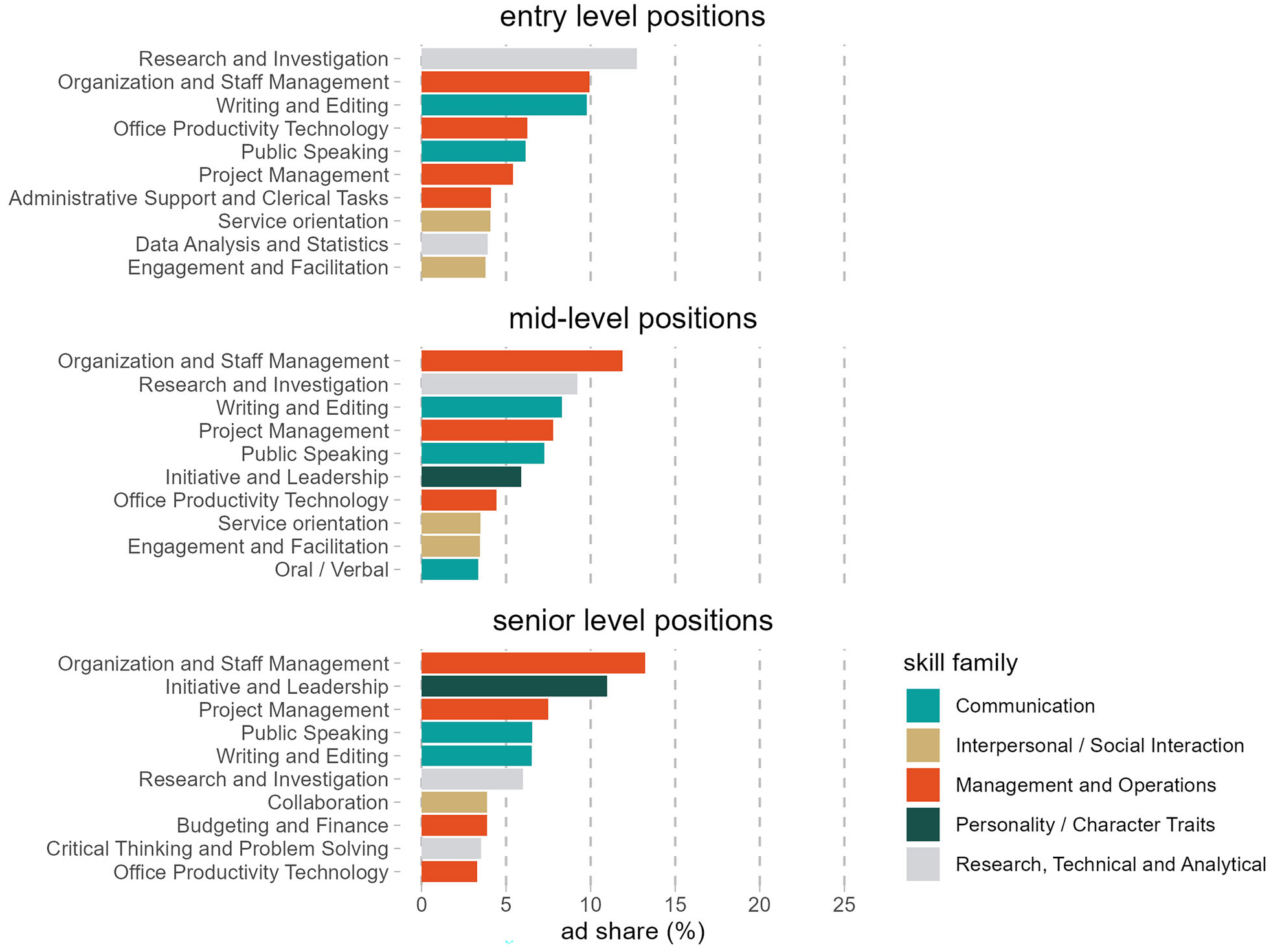
Figure 4: Most requested skill groups by experience. (Credit: Authors)
Their analysis found that planners tend to draw on multiple areas of specialized knowledge. Land use, community development, law, and economic development were the most commonly cited areas.
The authors also identified a small set of skills that employers nearly universally desire, regardless of specialization:
- Organizational and personnel management
- Research
- Writing
- Public speaking
- Initiative
- Leadership
Most of these skills are common to other white-collar professions, although not necessarily in the same proportion. To highlight skills that are important to a specific knowledge area but less common in others, the authors relied on z-scores.
The dominant skill groups aligned closely with many major planning specializations and were identified as the primary cross-functional skills. However, several other cross-functional skill groups showed moderate associations across multiple specializations.
These represent a mix of soft and hard skills, including:
- Administrative support and clerical tasks
- Collaboration
- Critical thinking and problem solving
- Data analysis and statistics
- Engagement and facilitation
- Initiative and leadership
- Office productivity technologies
- Oral and verbal communication
- Service orientation
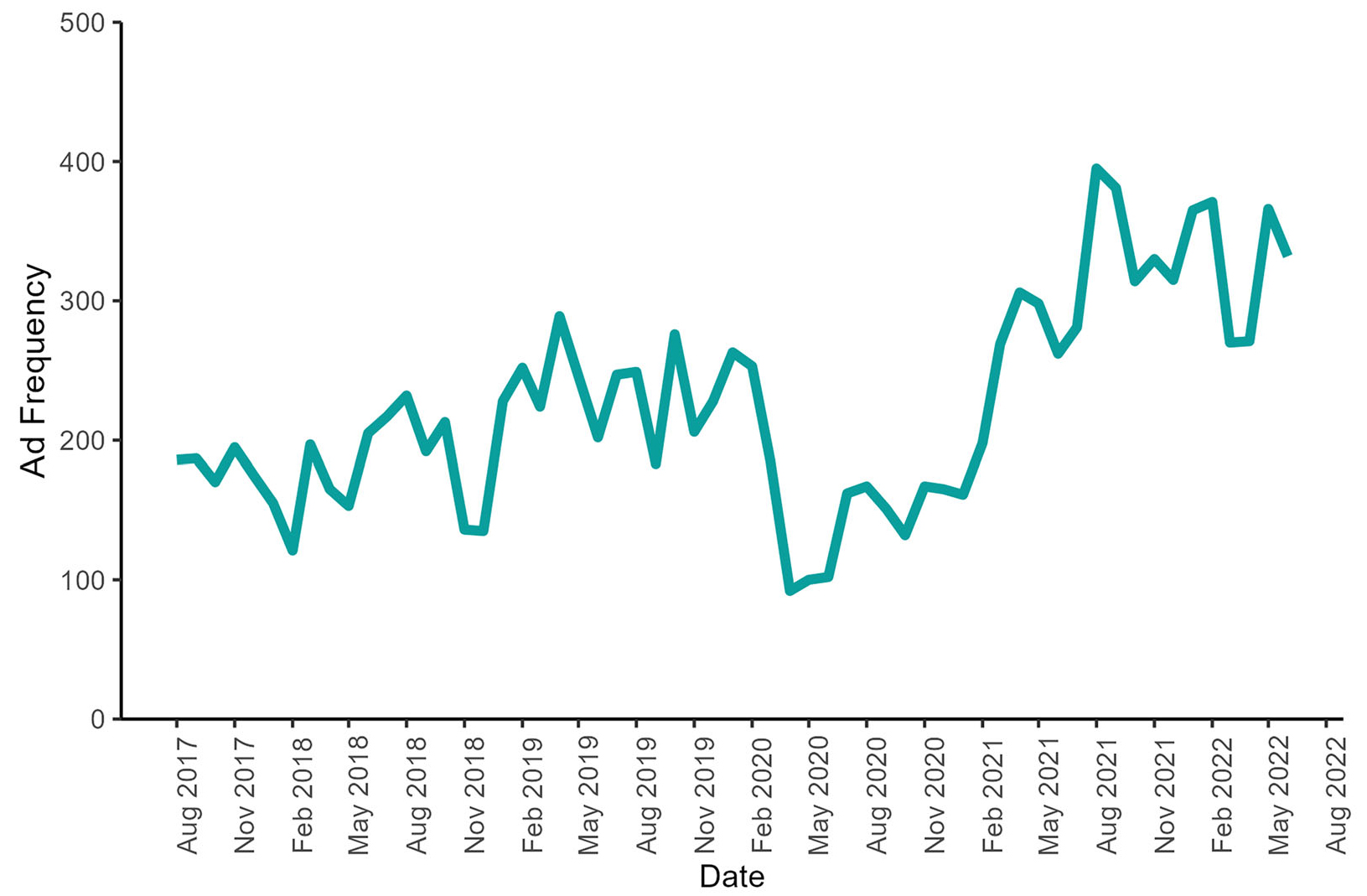
Figure 2: New job posting, by month. (Credit: Authors)
Nuances of Demand
A relatively higher proportion of land use ads called for research skills compared with other specializations. For community development and housing, the primary defining skill was engagement and facilitation. In terms of skill mix, planning, law, and code enforcement resembled land use.
However, ads seeking candidates with planning law knowledge were distinguished by a greater need for administrative support and clerical skills. In economic development, several skills emerged as possible differentiators, but marketing stood out the most.
Distinct from skills, the authors also examined the demand for specific types of planning-related knowledge. Because the analysis relied on two generalist planning job boards, it is not surprising that the most requested forms of specialized knowledge were land use, regulation, and zoning.
The authors caution that their sample may have overrepresented larger organizations and more senior positions while underrepresenting planning-adjacent fields. This limitation stems from their reliance on national planning-focused job boards that require fees for posting positions.
Planners Today and Tomorrow
Planners need to be able to explain who they are and what they do. Members of the field need to comprehend how this identity differs from related professions, such as landscape architecture and public administration. Articulating the profession's identity can help recruit more students and reaffirm its relevance.
A more clearly defined identity can guide curricula that respond to the needs of the profession while providing the theory and critical thinking skills that enable planners to adapt to changing demands.
Top image: Photo by iStock/Getty Images Plus/ RealPeopleGroup
ABOUT THE AUTHOR