
Free Data Science Tools for Mid-Career Planners
Summary
- Planners are increasingly expected to leverage technological advances to provide data-driven guidance to decision-makers.
- While emerging planners often build data literacy skills in planning school, mid-career professionals may feel overwhelmed by the sheer volume of potentially useful data and data tools.
- Seasoned planners can take advantage of free self-directed and open-source data science courses and texts to build new hard skills and stay current in the field.
Many employers still think of planners as generalists: A recent analysis of job postings for planning positions in the Journal of the American Planning Association (JAPA) makes this clear. However, the planning profession is not immune to the effects of the rapid technological transformation underway in society. And you can see it in the increased references to specific programming languages and data tools in APA's Jobs Online listing.
New data science methods and large datasets are potential goldmines for planners and policymakers. Planners can use natural language processing to ingest thousands of public comments and identify patterns. They can track public sentiment towards parking, public transit, and other municipal services on social media. And they can build models that predict code violations, bikeshare demand, or gentrification.
In short, the applications of data science are already copious — and planners are just getting started. As Tom Sanchez explains in a series of blog posts, AI and its closely related cousin, data science, may free up planners from routine tasks and allow them to focus on navigating policy tradeoffs and engaging with stakeholders and communities. Planners will need to build their skills to take advantage of new technologies, and APA's Upskilling Planners Initiative aims to help with skill development and understand how planning processes will need to adapt accordingly.
An Ocean of Data
Today's planners may feel as if they are swimming in an ocean of data. Beyond the more conventional sources from the U.S. Census Bureau and other government agencies, private vendors offer data from traffic sensors, satellites, mobile devices, building and infrastructure management systems, credit providers, and more.
These datasets are often large, messy, and awkward to access. And frequently, the data — or the algorithms that generate or interpret it — are biased. Facial recognition models trained on white people can fail to distinguish Black faces. Tenant screening algorithms used by landlords can perpetuate discrimination in the housing market.
Twenty years ago, a primer on working with census data and some basic GIS skills were typically sufficient for entry-level planners. Today's planning students normally have access to courses that teach them to harness large data sets and navigate the ethical pitfalls. They can take specialist courses on spatial analysis, data science, and machine learning. Even more traditional courses in GIS and statistics, in their modern incarnations, often introduce coding and other data science skills.
Professional Development Tools for Data Science
But how can seasoned planners, who graduated years or even decades earlier, come up to speed? Even planners in managerial roles benefit from understanding the potential of AI and data science. They may need to evaluate consultant proposals, work in interdisciplinary teams, or mentor or collaborate with specialist staff.
Fortunately, these planners can take advantage of the mushrooming of open-source course materials and other resources. The same open-source philosophy that underlies much of data science — from OpenStreetMap's geospatial data to machine learning software libraries — applies to educational materials too.
Some data science course materials are general in nature — they teach Python or text analysis. But others are specifically geared to planners, or focus on related fields such as urban studies or GIS.
Online resources
Online textbooks, courses, and course materials are available online. For online textbooks:
- The School of Cities at the University of Toronto offers Urban Data Analytics, Visualization, and Storytelling, which walks through the process of crafting a narrative and telling a story, as well as introducing more technical skills.
- Elijah Knaap's Urban Analysis & Spatial Science offers more advanced treatments of spatial analysis methods, as does Geographic Data Science with Python by Sergio Rey, Dani Arribas-Bel, and Levi Wolf.
At UCLA, I have made the lecture videos, exercises, and other course materials for my Urban Data Science course free to access. The course develops skills in scraping, processing, and managing urban data, and using tools such as natural language processing, geospatial analysis, and machine learning. It uses examples from transit, housing, and equity planning, and builds competence in open-source tools and languages such as Python and SQL. Planners wanting to go further can consider the (paid) UCLA Extension certificate in Data Analytics for Public Affairs.
Additionally, many university faculty have made their course materials available for free online: Geoff Boeing, Nikhil Kaza, and Xiaojiang Li.
Conclusion
Planners are fundamentally interdisciplinary generalists. Transportation specialists need to know a little about housing and urban design. Housing specialists need to know a little about economic development and land use. And that same principle applies to technical methods too, where planners benefit from understanding the foundations and potential of different approaches.
GIS has long been a fundamental skill where planners normally know at least some basics. Now, data science is gaining a similar position in planning practice. And with the help of free resources, like those highlighted above, experienced planners can begin building new skills to meet evolving professional demands.
APA's Upskilling Planners Initiative

APA has launched the Upskilling Planners Initiative to equip planners with the right skillsets to excel in dynamic environments shaped by evolving approaches and technologies. Our goal is to ensure that planners are fully prepared for the future and equipped with the knowledge, insights, and skills necessary to navigate changing environments effectively.
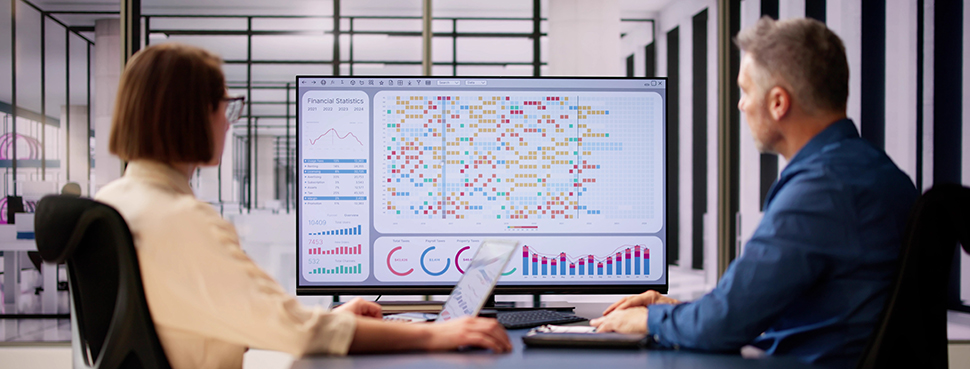
Top image: Dilok Klaisataporn/iStock/Getty Images Plus