
Spotlight on Zoning Practice
Leverage Zoning to Fight Against Criminalizing Homelessness
Summary
- Planners and local officials can use zoning to resist the rising tide of homelessness criminalization.
- By updating zoning definitions and use classifications, planners can help ensure that all physically and operationally similar residential uses are treated the same.
- More nuanced zoning techniques, such as targeted exemptions, accessory use permissions, overlay districts, targeted exemptions, and planned development options, can help meet the need for housing alternatives.
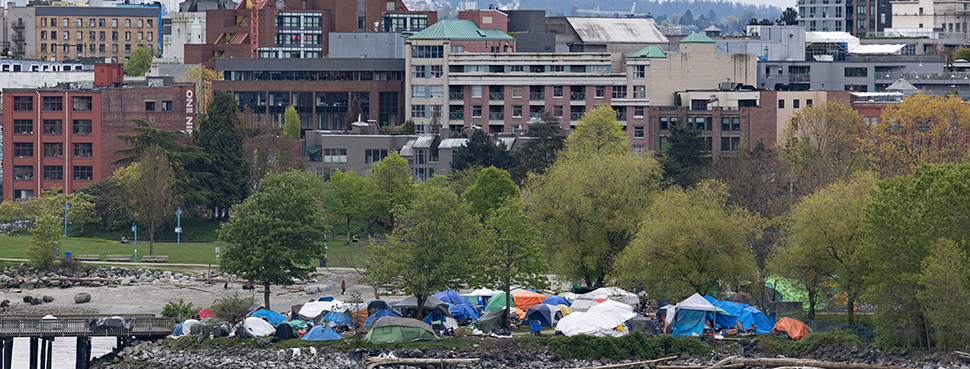
Chronic homelessness is a classic example of a wicked problem. It's deeply intertwined with widespread housing shortages and a host of other social and economic factors. And the current political momentum seems to be in the direction of criminalizing homelessness rather than addressing root causes.
According to Chasidy Miles and Lauren Ashley Week in the January issue of Zoning Practice, "Zoning Alternatives to Penalizing Homelessness," planners shouldn't need to rely on moral arguments to shift the policy focus. Enforcing bans on public camping is a "whack-a-mole" approach that costs more than providing housing and services. While zoning reform alone cannot eliminate chronic homelessness, Miles and Week highlight several key zoning strategies that represent more compassionate and cost-effective responses to this wicked problem.
Reconsider Use Classifications
Compassionate zoning for the unhoused starts with use classification. As Miles and Week note, temporary shelters, transitional housing facilities, homeless resource centers, and permanent supportive housing are all stigmatized land uses that can attract stiff opposition from neighboring property owners. However, the physical and operational characteristics of these uses are seldom markedly different from less-stigmatized uses, such as purpose-built student housing and independent and assisted living facilities for older residents.
According to Miles and Week, the simplest and most elegant solution can be to affirm the residential nature of these uses and their regulatory equivalency to less-stigmatized uses through zoning use definitions or classification provisions. This clears the path for allowing uses that primarily serve the otherwise unhoused by right, without requiring a public hearing for each development application.
Meet the Need for Housing Alternatives
The bigger challenge from a zoning perspective is safely accommodating demand for encampments or other housing alternatives for those who can't access or aren't a good fit for emergency shelters, transitional housing facilities, homeless resource centers, or permanent supportive housing. According to Miles and Week, this is where more nuanced zoning strategies can help.
Very few communities are comfortable with defining and permitting urban camping as a principal use in one or more base zoning districts. But accessory use permissions, overlay districts, targeted exemptions and incentives, and planned development options that open up opportunities for safe parking areas, managed encampments, and tiny home communities may offer a more palatable middle ground.
Subscribe to Zoning Practice
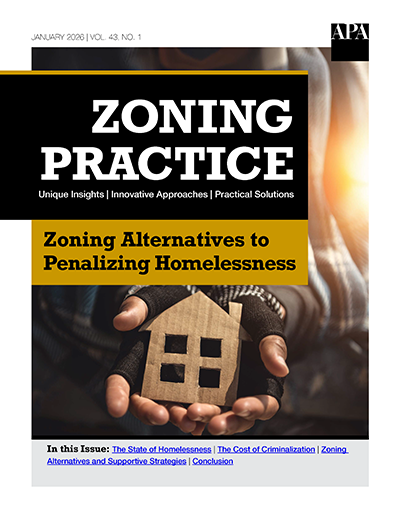
Each issue of Zoning Practice provides practical guidance for planners and land use attorneys engaged in drafting or administering local land use and development regulations. An annual subscription to ZP includes access to the complete archive of previous issues.
Top image: Jertography / iStock Unreleased