
Uncovering JAPA
Lives Are Not the Only Thing That Matters in Hazard Planning
Summary
- A national survey of over 600 urban planners and emergency managers shows that hazard mitigation planning involves tradeoffs between saving lives, costs, economic impacts, and equity.
- Planners were more likely than non-planners to prioritize equitable outcomes in lower-income areas, even if it meant accepting slightly higher risks elsewhere.
- The study highlights the need for hazard mitigation plans to explicitly address value trade-offs, improve transparency, foster collaboration, and adopt creative mitigation strategies.
Hazard mitigation planning generally seeks to reduce the loss of human life. Yet official plans and the broader planning literature seldom address, with transparency, the tradeoffs inherent in prioritizing life safety over other objectives of mitigation planning.
In "Values From the Frontlines: Planners and Other Local Public Officials on Loss of Life and Equity in Flood Risk Mitigation" (Journal of the American Planning Association, Vol. 91, No. 4) Kris Wernstedt, Lucia Velotti, and Patrick S. Roberts examine differences in professional values regarding such tradeoffs through a national survey of more than 600 urban planners and emergency managers.
Revealing Values
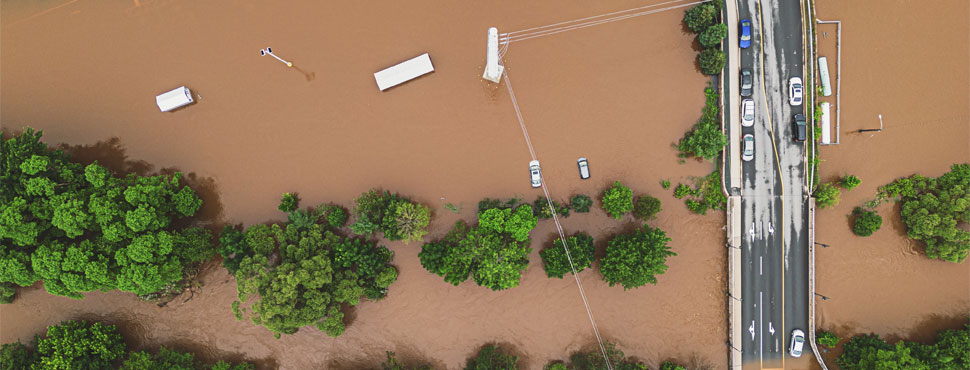
Planners and non-planners engaged in hazard mitigation must weigh trade-offs among objectives when evaluating the desirability of various flood mitigation tools, such as investing in physical infrastructure, strengthening building codes, and zoning.
The authors sought to define and differentiate professional values around such mitigation, especially:
- Costs of protection
- Effects of protection on the loss of life
- Distribution of flood damages
The study breaks new ground by linking the planning literature to the concept of value trade-offs.
The authors' analysis suggests that some of these values differed between planners and non-planners. Both groups of professionals indicated a clear preference for fewer fatalities, lower mitigation costs, reduced flood damages, fewer days of business closures, and even-handed protection for both high‑ and low‑income areas. However, planners appeared less averse than non-planners to fatalities and flood damages. Planners also appeared more averse than non-planners to damages in low-income areas, a preference that may reflect professional norms to promote more equitable outcomes when lower-income communities have fewer resources to cope with damages.
The Cost Of Life
Planning researchers typically do not treat death as a specific object for critical examination. And it may seem that hazard mitigation planners always would prioritize the loss of life over economic losses or other mitigation objectives. Respondents to the authors' survey did appear willing to trade off loss of life with other factors, such as the costs of a mitigation alternative, and to a lesser degree, the costs of flood damages and business closures.
What might this surprising finding suggest? The authors argue that in real life, decisions to protect lives and property in one area may threaten lives and property in another, requiring uncomfortable tradeoffs from the outset. The fact that many communities continue to allow human occupation of flood-prone land also suggests the acceptance of a commonplace balancing of economic benefits against other risks, such as the higher risk of loss of life. In addition, those engaged in hazard mitigation face budget constraints that inherently drive tradeoffs.
Tradeoffs Require Transparency
This exploratory study does not yield definitive conclusions about professional preferences. It asked the planners and non-planners responding to the survey to consider hypothetical situations rather than observing their choices in real‑world settings.
Nonetheless, the survey results suggest that planners and others involved in hazard mitigation planning may trade off the potential loss of life from flooding with other factors, such as the costs of a mitigation alternative and, to a lesser degree, the costs of flood damages and business closures. The survey evidence also suggests that planners and non-planners may have different professional norms about these tradeoffs.
While hazard mitigation practices may prioritize the saving of lives in general terms, they typically do so without systematic, transparent elaboration or consideration of possible tradeoffs against other objectives.
The authors argue that these tradeoffs in hazard mitigation plans warrant explicit consideration. Making more transparent such tradeoffs, and the different values or weights that different professionals give to them, can support the development of more creative mitigation alternatives.
Takeaways for practice:
- Hazard mitigation planning officials should articulate and discuss their values about the benefits and costs of flood risk mitigation.
- Explicit values support a common understanding with other practitioners, elected officials, and the public.
- Spotlighting the interplay of diverse values enlarges the dimensions of risk in hazard mitigation and planning debates.
Top image: Photo by iStock/Getty Images Plus/ shaunl
ABOUT THE AUTHOR