


Feb. 19, 2026
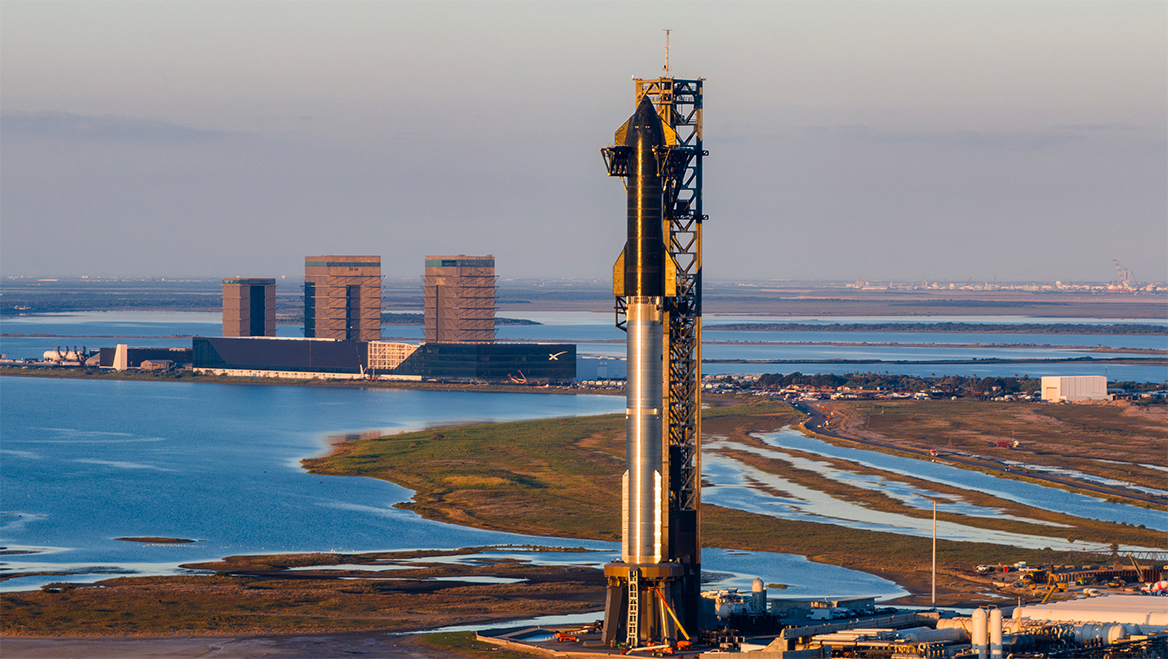
This past May, the Space Exploration Technologies Corporation (SpaceX), owned by Elon Musk, launched a different sort of endeavor: a company town in Texas called Starbase.
Sitting at the confluence of the Rio Grande River and the Gulf of Mexico, the 1.6-square-mile town of 600 people also is home to the private spaceport for the Starship spacecraft and Super Heavy rocket that have been designed to eventually reach the moon, Mars, and beyond. Company founder Musk has pursued this ambition since at least 2021, when he posted on X: "Creating the city of Starbase, Texas. From thence to Mars, and hence the Stars."
As the company hurtles into space, though, its new town is generating significant concerns on Earth.
Ready for takeoff
Starbase has created significant terrestrial changes in this once leisurely coastal settlement. There are notable environmental concerns, including damage to sensitive wetland areas, as well as controversy about public beach closures on launch days.
After arriving in the small, unincorporated community of Boca Chica Village in 2014, SpaceX and its employees began purchasing residential properties and other land. Now, those workers make up the lion's share of the population, with just a handful of previous residents left.
Starbase's incorporation in 2025 was approved by a 212-6 vote through a petition-triggered election. While lacking the broader powers of a home-rule city, it's governed by a city commission consisting of a mayor (a current SpaceX vice president) and two commissioners (a current and a former company employee), who have land use, taxing, spending, and other powers. Its chief administrative officer is City Administrator Kent Myers, PhD, a seasoned city management veteran.
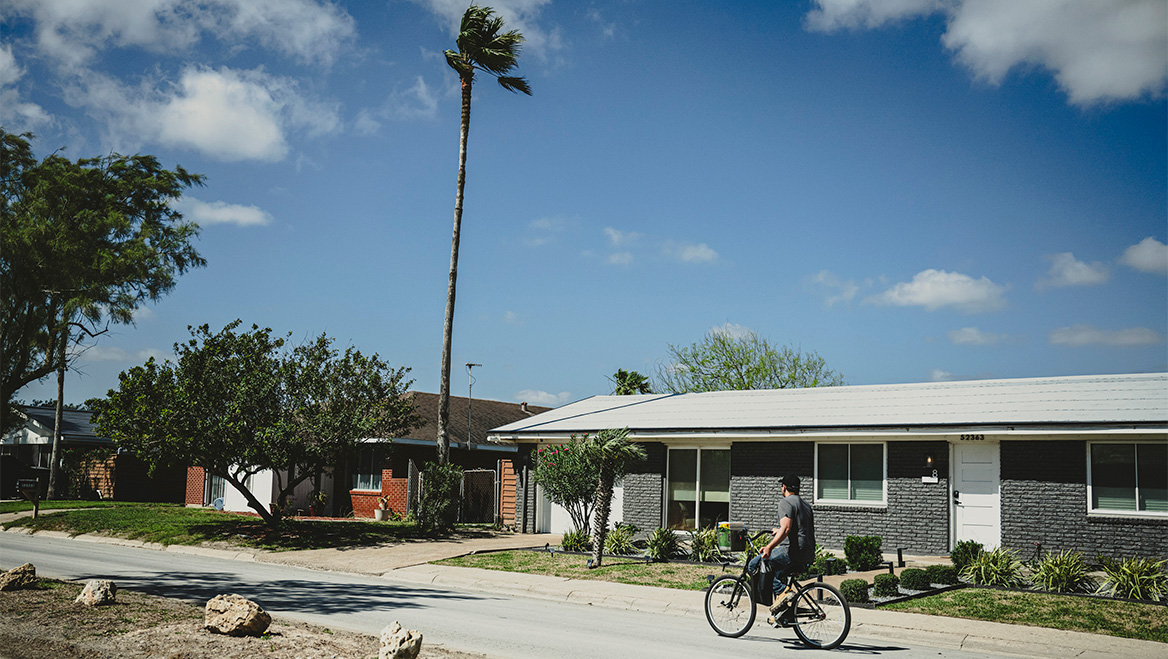
After adding to its city management team, staff are focusing their efforts on routine matters, such as establishing procedures for limiting access to roads like Memes Street, where SpaceX founder Elon Musk owns a home. Photo by Meridith Kohut/The New York Times.
With management in place, the fledgling city is now working on its public safety and welfare responsibilities like setting the official boundaries, adopting a nuisance ordinance, extending hours for alcohol sales, and defining procedures for requesting gated street access. Several of these items have already been approved.
More substantive efforts came with the adoption of comprehensive planning and zoning. Three zoning categories were established: mixed-use for most parcels, open space, and heavy industrial. Although several landowners, concerned about impacts to their property rights, expressed opposition, the ordinance passed unanimously.
Meanwhile, other services, like law enforcement and mosquito control, were provided through inter-local agreements with Cameron County.
In large part, these changes have been welcomed — unsurprising, given the growth SpaceX has sparked in the long-struggling lower Rio Grande Valley. The company's recent analysis reports a gross economic output of $13 billion and estimates 70 percent of its 4,000-person workforce is local, including from nearby Brownsville.
However, the incorporation also underscores the demanding interconnections of land, people, and governments, as some nonresidents and a few remaining original residents have expressed concerns.
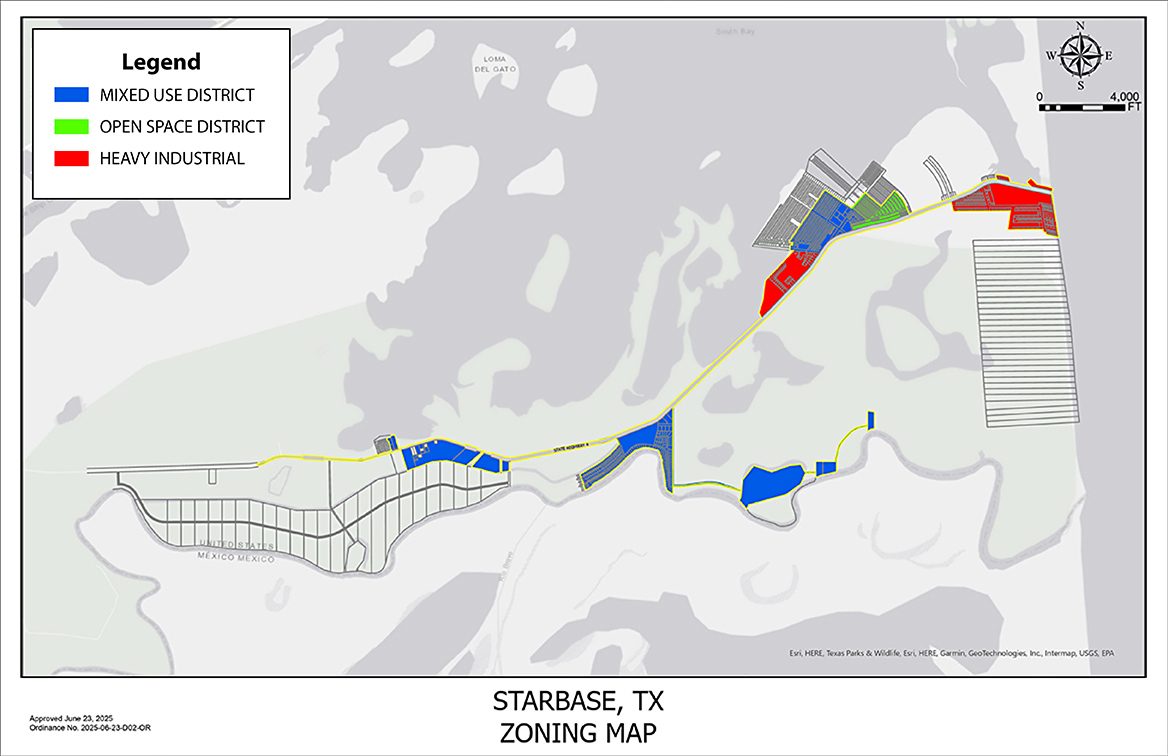
In June 2025, Starbase's city commission approved zoning districts for mixed use, open space, and heavy industrial, which are SpaceX sites (in red). Map courtesy of City of Starbase.
Keeping plans in the air
In 2018, when Musk was targeting this secluded site, he declared at a press conference, "We've got a lot of land with no one around, and so if [a rocket] blows up, it's cool."
Rockets did blow up, and even when launches went as planned, the impacts were intense. Launch debris, fire, hazardous fuels, and the deluge cooling system have threatened the entire surrounding ecosystem.
These issues are, to an extent, distinct from the incorporation, because the company still must abide by federal and state regulations that protect land, air, water, and species. However, says Myers, "one of the challenges is that people often get confused with the fact that the City of Starbase is separate from the private company," which means the city is entangled in these controversies.
For example, Myers describes the proposed annexation of the approximately 1,000-acre Rockhands Mitigation Bank as "part of our effort to preserve the dunes along the coast." The city has formed a Natural Resources Committee and is collaborating with Cameron County on an erosion response plan, but environmentalists have criticized the intent to use this wetland and tidal flat acreage to mitigate SpaceX's future destruction of other similar areas elsewhere.
Contrary to typical requirements, Rockhands will not be enhanced or restored, but simply preserved in its current state. The Army Corps of Engineers approved this request in January.
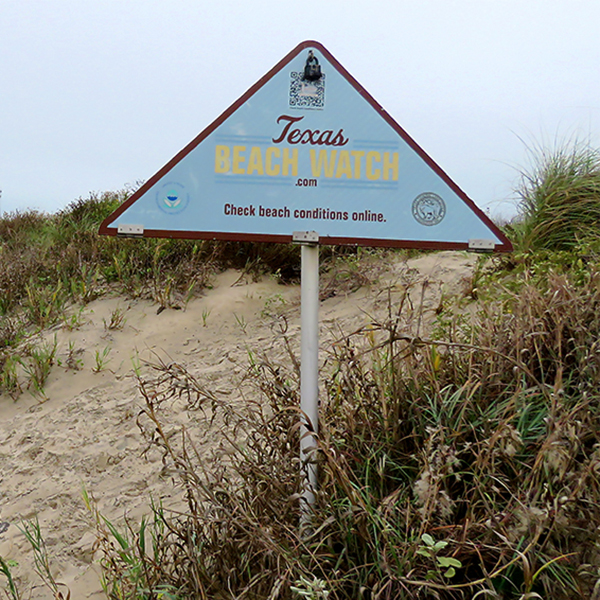
Texas lawmakers recently allowed Starbase near unilateral authority over access to Boca Chica Beach, which is located near a SpaceX launch site. Photo by Michael Hogan.
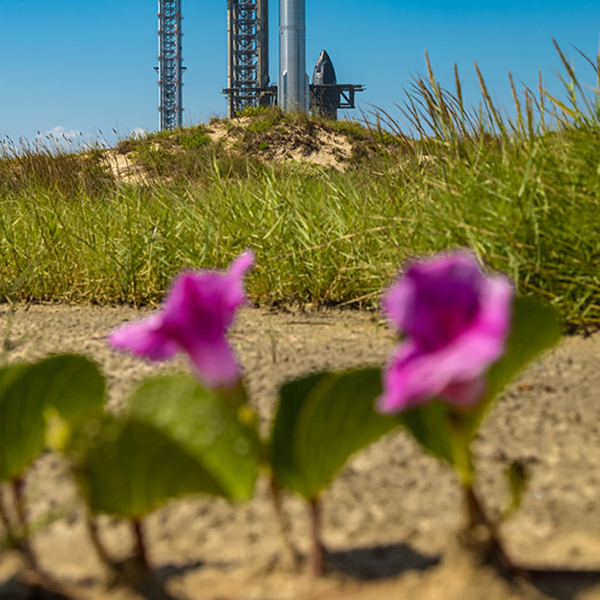
While native beach flora sustains Esto'k Gna Tribal Nation's spiritual traditions, SpaceX's nearby activities have prevented scheduled ceremonies. Photo by Dima Gilmour.
Some of the Rockhands site belongs to the state and "none of it is developable because it is all wetlands," says Jim Chapman, who serves on the board of the Rio Grande environmental nonprofit Save RGV. He argues that SpaceX wants to protect the area as a means of filling in and destroying other wetlands in their relentless drive to expand. "Save RGV is not in the least hopeful that the incorporation of Starbase will lead to better environmental protection. [Such] protections and regulations are just speed bumps they have to pay lip service to and navigate around."
Beach access is another volatile issue. The Texas General Land Office, the agency that oversees the management of state lands, declares that "public access to Gulf Coast beaches is not just the law, it is a constitutional right." For years, this privilege conflicted with SpaceX's need to shut down the beach and its only ingress road during launches and tests, although the county typically granted all closure requests.
Recently, however, that authority effectively shifted to the city. In the summer of 2025, the Texas legislature assigned closure power to the state's Space Commission, which promptly issued a standing order granting Starbase virtually unilateral authority. This action is under review by the Texas Supreme Court. Since the Federal Aviation Administration is likely to allow up to 25 annual launches, those — in combination with testing — could lead to significant closures.
This is of particular concern to the Esto'k Gna (or Carrizo/Comecrudo) Tribal Nation. The beach, flora, and fauna sustain their spiritual traditions, and SpaceX activities have precluded ceremonies linked to specific dates. More broadly, other beachgoers have pushed back against this unprecedented empowerment, although Myers says the city is "attempting to minimize any inconvenience by providing advanced notices for any beach closures."
Will Starbase take flight?
Starbase's founding has been unusually charged for a small city incorporation. While the city describes itself as "a symbol of human ambition ... that will inspire future generations on this planet and others," opponents believe something else — that it is laying claim to land without fully recognizing or respecting its culture, traditions, and ecosystem.
In between lies the prosaic demands of establishing a new municipal government.
RECOMMENDED ARTICLES