



July 9, 2026
Summertime is here. But if you’re looking for a break from the sweltering heat, or you want to dive into something other than water, check out these new books featured in the Journal of the American Planning Association (JAPA) to expand your knowledge base.
Stay in-the-know
This reading list includes topics that are top of mind for planners, like housing, environmental lessons, equity, and gentrification. After reading each brief synopsis below, click through to read the full JAPA review. Special thanks to our JAPA reviewers: Tridib Banerjee, Daniel Press, Phil Thompson, David P. Varady, and Thomas J. Vicino.
OUR RECOMMENDED BOOKS ARE:
Garden Apartments: The History of a Low-Rent Utopia
Joshua B. Freeman, 2025, University of Chicago Press, 288 pp, $35
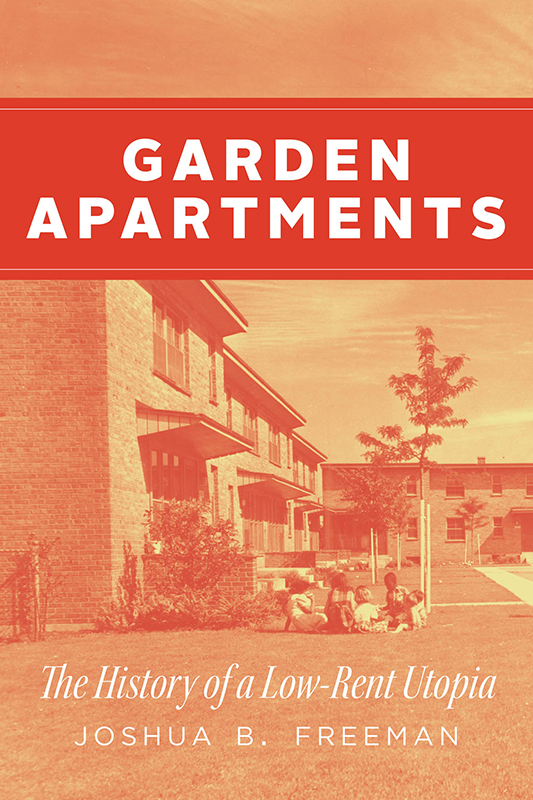
Despite the millions of units built during the 1930s, ’40s, and ’50s, garden apartments have not been respected by scholars or policymakers. This book argues, however, that garden apartments have generally served their residents well and have been “a rare success story” in America’s efforts to provide affordable housing.
The high point for garden apartments occurred immediately after World War II. The massive wave of apartment construction resulted directly from government action with the passage of Section 608 legislation that promoted rental housing by offering mortgage insurance lending that was essentially risk-free.
Planners should be interested in this book because the history of garden apartments highlights three dilemmas slowing the expansion of multifamily housing today: how government can stimulate private financing of apartments without the fraud and corruption of the Section 608 program, how to foster housing quality while minimizing cost, and how to nurture socially vibrant communities that are also socioeconomically diverse.
Read the full JAPA review by David P. Varady, University of Cincinnati.
Smog and Sunshine: The Surprising Story of How Los Angeles Cleaned Up Its Air
Ann Carlson, 2026, University of California Press, 312 pp, $26.95

In 14 fast-paced chapters, the author provides a detailed history of Los Angeles’ struggle with air pollution over the last 100 years. Carlson was motivated to write the book in part because she felt that LA still has, unfairly, a bad rap about its air. Not surprisingly, complexity characterizes both the LA air pollution problem and its improvement.
Knowing that many of today’s readers worry more about climate change than smog, the last chapters are devoted to air pollution lessons that can be applied to abating greenhouse gas emissions. There are no surprises here. Progress requires the sustained confluence of public demand and activism, determined policy entrepreneurship, and multilevel government coordination, as well as some impressive scientific and engineering breakthroughs.
The book does not purport to advance policy innovation theory or to provide an activist’s campaign manual. But it will resonate with graduate students in policy and planning, as well as environmental policy practitioners.
Read the full JAPA review by Daniel Press, University of California, Santa Cruz.
In Levittown’s Shadow: Poverty in America’s Wealthiest Postwar Suburb
Tim Keogh, 2023, University of Chicago Press, 328 pp, $26
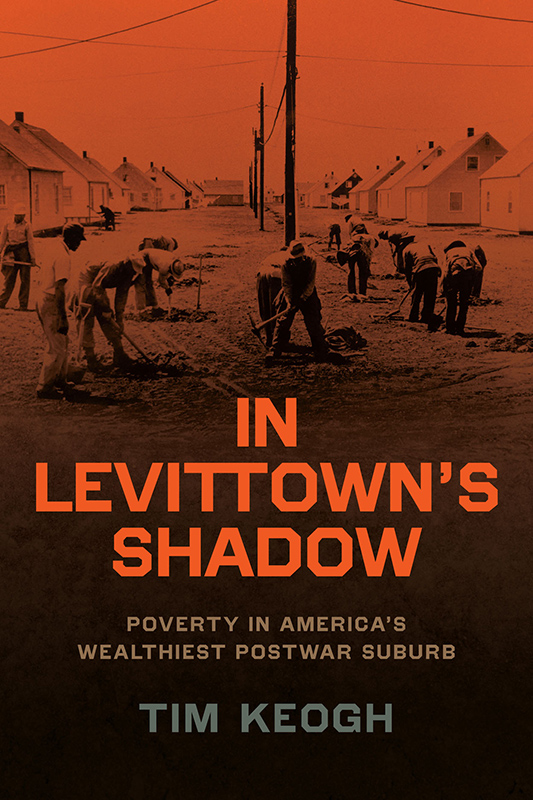
Focusing on Long Island in New York, the book’s central intervention is to reframe suburbia not as a space defined by exclusion alone but as one structured by exploitation. The book shows how policymakers repeatedly misdiagnosed the problem of poverty by focusing on spatial redistribution rather than confronting the labor and housing regimes that structured inequality within the suburbs. Efforts such as fair-share housing proposals or suburban dispersal programs often reproduced inequities rather than alleviating them.
For planners, this critique is especially valuable because it highlights the limits of place-based solutions that are not accompanied by broader reforms in employment, housing finance, and social welfare.
Read the full JAPA review by Thomas J. Vicino, Georgia State University.
Class Warfare in Black Atlanta: Grassroots Struggles, Power, and Repression under Gentrification
Augustus Wood, 2025, University of North Carolina Press, 360 pp, $34.95
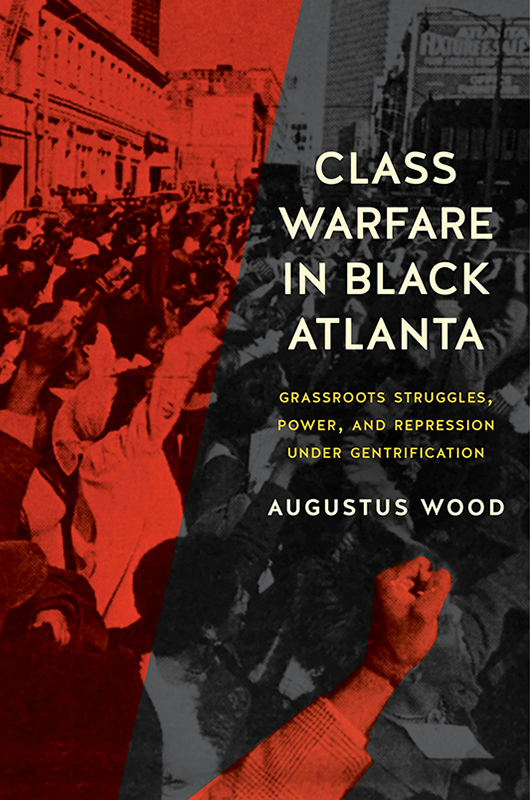
This well-researched, insightful, and provocative book posits that gentrification is part of neoliberal globalization and governance, which led to the transfer of good-paying unionized U.S. manufacturing jobs to low-wage labor in repressive neo-colonies overseas; supported so-called pro-growth urban policies including low corporate taxes and cuts in social welfare spending for the poor; and forcibly removed and dispersed working-class Black communities from urban centers to attract corporate investments for office headquarters, business conventions, and sports stadiums.
Wood’s argument about gentrification is sophisticated. Deindustrialization made the exploitation of cheap labor markets outside of the U.S. more feasible and profitable. And jobs like auto manufacturing around Atlanta left the country just as Black workers established a foothold in industry, pushing them into unstable, low-paying jobs and into the underground economy. The author provides a rich and too-often overlooked account of Black working-class resistance to their displacement.
Read the full JAPA review by Phil Thompson, Massachusetts Institute of Technology.
Modernism’s Magic Hat: Architecture and the Illusion of Development Without Capital
Ijlal Muzaffar, 2024, University of Texas Press, 312 pp, $39.95
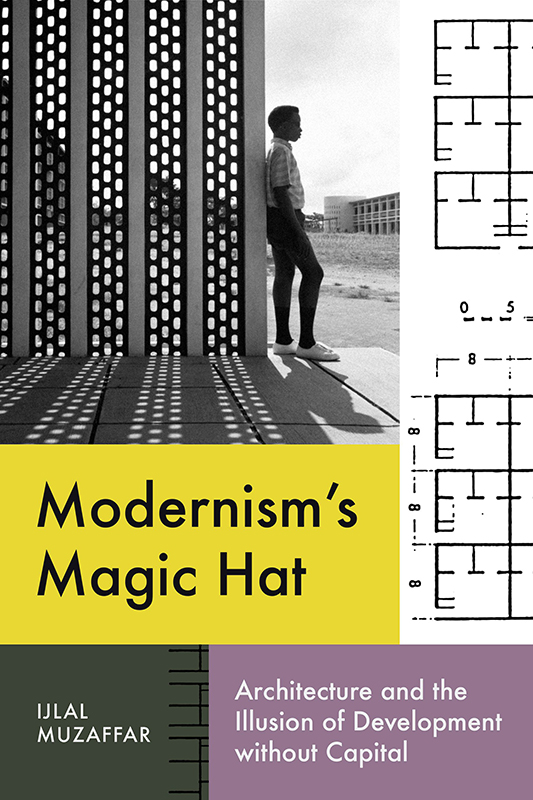
This book examines the notion of “development in the absence of capital,” seemingly an oxymoron, but the reality for the former colonies of the West when they began their postcolonial and decolonizing travail around the middle of the last century. It presents a nuanced and complex interrogation of the professional engagement of architects, planners, and urban designers in incipient postcolonial development and their ideology and understanding of the impoverished Global South.
Muzaffar presents multiple case studies, including informal self-help housing for the poor, architectural innovations suitable for the tropics, the design of residential settlements, and planning for a new town. These observations are based on several case studies from Asia, Africa, and South America, and they represent a critical historiography of architecture and planning efforts in development undertaken during the early years of the last century. And while it is a critical narrative — often blistering, dense, and even poetic — it is always profound and provocative, based on impressive scholarship.
Read the full JAPA review by Tridib Banerjee, University of Southern California.
RECOMMENDED ARTICLES