


Planner Profile: Meet Kyle Shiel, AICP

Planner Profile is a new series spotlighting the unique experiences of our peers who are making a difference in the profession and at APA.
Kyle Shiel, AICP, is a principal planner at the Capitol Region Council of Governments (CRCOG). Based in Hartford, he's also the co-chair of the Connecticut Chapter of the American Planning Association's government relations committee.
How did you discover planning as a profession?
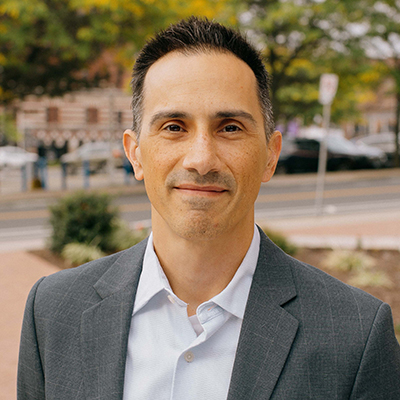
Kyle Shiel, AICP, is a principal planner at the Capitol Region Council of Governments (CRCOG). Photo courtesy of Kyle Shiel.
I've always been interested in public policy, but over time, I began noticing a pattern of my particular interests: the lack of attainable housing in high-opportunity places, the inability to get around without a car, why certain neighborhoods "felt" better than others, and an ambient sense of annoyance over gigantic parking lots. Reading books like Suburban Nation and Geography of Nowhere helped clarify and articulate the cause and effect behind what I had been feeling, namely that our built environment is a result of specific policy choices and that we have the opportunity to make different choices. A planning career felt like a natural fit.
What aspect of your work have you found most fulfilling?
I enjoy having the opportunity to collaborate and think through issues with no obvious easy answers — your classic "wicked problems." As a self-described generalist, the multi-disciplinary nature of the work constantly throws you unique questions and challenges. You have the opportunity to work with smart, passionate people with vastly different professional and educational backgrounds, so there's always something new to learn. Also, as a lifelong map nerd, it's a great gig!
Is there a project that makes you especially proud?
I recently co-authored a paper on third places with my CRCOG colleague Jacob Knowlton, and we've both been gratified by the response so far. We wanted to explore the relationship between the built environment and some concerning social and cultural trends we've seen accelerate since the pandemic. The decline and evolution of third places was a natural planning-related launchpad. We're from different generations (I'm a late Gen Xer/"xennial" and Jacob is Gen Z) with slightly different perspectives, but we both felt the decline of in-person socialization was a serious problem and that our built environment is one of the main culprits. Thankfully, that's something planners can play a part in addressing.
What's your favorite third space?
It depends on the day and my mood, but if I'm feeling lazy, it would be a coffee shop with a homey vibe of some sort — any place that's comfortable to sit and chat for a while. When I have more energy, I'd say it's either the gym or some sort of hiking spot.
If you could create the perfect city, what would that look like?
I'd start with a few broad principles. Highly connected, multi-modal streets (no cul-de-sac archipelagos) with most of life's necessities within a short walk or bike ride at best and maybe a very short car ride at worst. A range of housing options to accommodate people through changing life circumstances, so they can maintain and even expand their social networks over time. And, lastly, a balanced place that's dense enough to have lots of cool stuff, but also thoughtfully designed with enough privacy and green space to accommodate our need for some peace and quiet.
For inspiration, I think of the cultural vibrancy of New York City, the transit system of Hong Kong or Tokyo, the bike network of Amsterdam, the housing affordability of Vienna, the natural landscape of Vancouver, urban green spaces like Singapore, and the social trust of places like Minnesota or Iceland.
What's one food you couldn't live without?
Boring but honest answer: pizza.
Want to be the next Planner Profile? Fill out this form to help us get to know you better.