
Equity in Practice
Mapping Pride: Atlanta's Effort to Document LGBTQ History
summary
- Despite Atlanta's rich LGBTQ+ history, many of the places associated with the city's LBGTQ+ community were never formally documented, recognized, or protected.
- A collaborative effort with support from a federal historic preservation grant helped create a framework for identifying and evaluating places associated with LGBTQ+ history and assessing their potential eligibility for historic recognition and preservation.
- The initiative continues through the city's Preserving Pride program.
Beginning in the mid-twentieth century, Atlanta served as a refuge for LGBTQ+ people across the Southeast. The city's reputation helped shape a vibrant network of organizations, businesses, cultural institutions, and gathering places.
Many of these activities became concentrated in Midtown, also known as "the gay epicenter of the South." The neighborhood also played a central role in organizing responses to the HIV/AIDS crisis, advancing LGBTQ+ rights, and creating opportunities for community connection.
Atlanta also helped launch the careers of artists, performers, and cultural figures whose impact would eventually reach national audiences. Among the most recognizable is RuPaul, who spent formative years in Atlanta's LGBTQ+ community before achieving international fame.
Despite this rich history, many of the places associated with Atlanta's LGBTQ+ community were never formally documented, recognized, or protected. Traditional preservation efforts often focus on architectural significance or well-documented historical events, leaving many sites associated with underrepresented communities absent from official records.
As redevelopment transformed neighborhoods and longtime gathering places disappeared, community leaders and preservation advocates grew concerned that important stories and spaces could be lost.
Documenting Places That Shaped a Community
To better understand and preserve Atlanta's LGBTQ+ heritage, in 2021 the City of Atlanta Department of City Planning partnered with Historic Atlanta, the Georgia Historic Preservation Office, preservation consultants, historians, and community stakeholders to develop the Atlanta LGBTQ+ Historic Context Statement. Supported by a $25,000 federal historic preservation grant, the initiative sought to create a framework for identifying and evaluating places associated with Atlanta's LGBTQ+ history and assessing their potential eligibility for historic recognition and preservation.
framework for identifying places of significance
Rather than beginning with a list of buildings, the project first focused on understanding the broader history of Atlanta's LGBTQ+ communities and their relationship to the city's built environment. Project partners established an LGBTQ Historic Preservation Advisory Committee to guide the effort and provide expertise throughout the research process. Extensive research included reviewing archive collections, community publications, oral histories, and interviews.
The City of Atlanta and Historic Atlanta developed a comprehensive outreach strategy that included public meetings, stakeholder engagement, university partnerships, public surveys, and participation in events such as Atlanta Pride. Public input helped make sure that LGBTQ residents, artists, performers, and other historically underrepresented voices were reflected in the final document.
Nine historic themes that shaped Atlanta's LGBTQ+ experience were identified and provided planners and preservation professionals with a framework for identifying, documenting, and evaluating places associated with Atlanta's LGBTQ+ history. Researchers then mapped both existing and lost sites connected to these themes, creating an inventory of places that contributed to the city's social, cultural, and physical development.
The project also established a process for documenting underrepresented histories that can be adapted by other communities seeking to create a more inclusive approach to preservation planning.
From Documentation to Preservation
Completed in 2023, the Atlanta LGBTQ+ Historic Context Statement joins other major cities across the U.S. in comprehensive efforts to document LGBTQ+ history. The project created a publicly available framework for understanding how LGBTQ+ communities shaped the social and cultural fabric of Atlanta while providing guidance for identifying and evaluating historically significant LGBTQ+-associated resources.
The project's influence can already be seen in Atlanta's preservation efforts. In 2021, the Atlanta Eagle became the first LGBTQ+-associated property designated as a City of Atlanta Landmark Building/Site, followed by many others.
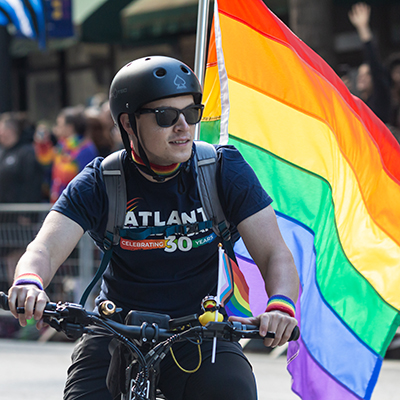
Bike rider during the 2023 Atlanta Pride parade. Credit: iStock Editorial/Getty Images Plus, Blulz60.
Rather than concluding with publication of the Historic Context Statement, the initiative has continued through the City of Atlanta's Preserving Pride program. Led by the Department of City Planning's Office of Design, the program seeks to expand public awareness of Atlanta's LGBTQ+ history while identifying opportunities to recognize and preserve places that played important roles in the community's development.
The project website also includes a public survey that allows residents to contribute information about significant LGBTQ+ places and stories, helping expand the historical record over time. This ongoing effort is supported by limited annual funding through the City of Atlanta’s General Fund as part of the Department of City Planning/Office of Design's budget.
Considerations for Your Community
Atlanta's experience demonstrates that preservation begins with documentation. By proactively documenting LGBTQ+ history before additional sites were lost to redevelopment or changing land uses, Atlanta created a foundation for future preservation efforts and expanded the range of stories represented in the city's historical record.
The project also highlights the value of community engagement in identifying cultural assets that may be absent from traditional archives and preservation surveys, reinforcing that residents are not only participants in the process, but also experts on their community’s history and identity.
Finally, Atlanta's sustained commitment helps communities recognize underrepresented histories, guide future preservation decisions, and create a more inclusive understanding of the people and places that shaped their development.
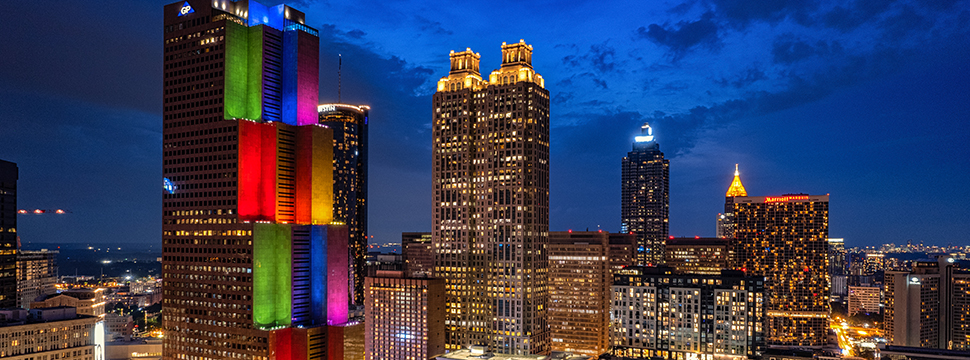
Top Image: Atlanta building illuminated during Pride Month, 2022. Credit: E+ Suspended Image.
About the Author