

April 23, 2026
Across the country, a quiet crisis is etched into the landscape of rural America. Towns built around railroads that once grew to hold thousands of residents now have half as many. Shrinking graduating classes, half-filled pews in historic churches, and Main Streets lined with vacant storefronts tell the story: These communities are operating far below their built capacity while carrying the maintenance costs of infrastructure designed for a different era.
This decline was not born from a lack of grit, but is rather the byproduct of structural change. Today, many small towns are at a crossroads. One path leads to continued decline or gradual absorption by a nearby metropolitan area. The other, however, is a deliberate and distinct alternative leading to intentional reinvention.
4 Pillars of Revitalization
While cities provide intensity and scale, small towns can provide calm, connection, and quality of life. In smaller communities, lower living costs and closer proximity between daily destinations can allow greater work-life balance. Small town living can also be ideal for remote workers.
To unlock the potential of existing infrastructure and land, communities can focus on four practical areas.
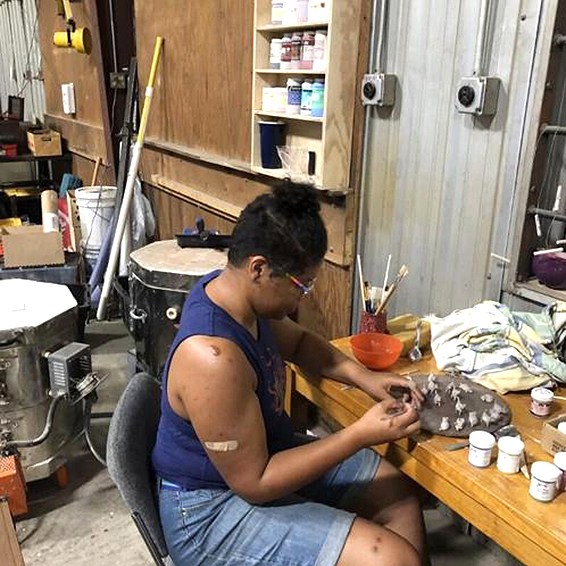
Ithaca Generator, a community makerspace, is an example of how small towns can boost their local economies. Photos courtesy of Ithaca Generator.
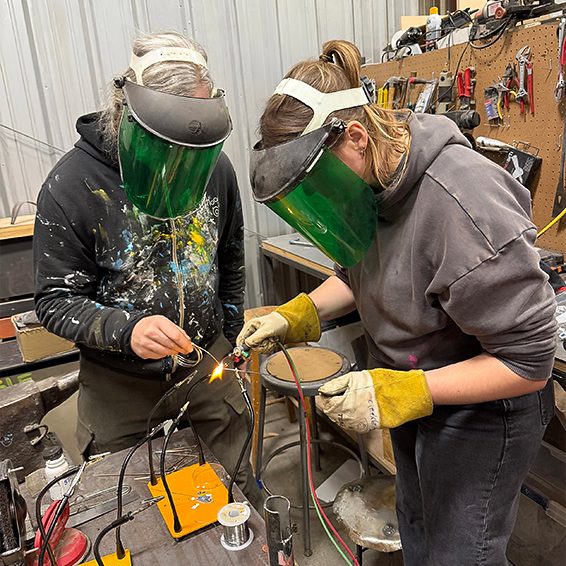
The Ithaca Generator warehouse hosts open houses for the community to see their woodshop, metal shop, ceramics kilns, pottery wheels, and more.
1. Cultivate local enterprise
Agriculture remains central to many of these communities, but it can evolve. Food production is foundational resiliency and a source of outside income for the community. Greenhouses and small-scale food production can supply high-quality products to nearby urban markets. Shared commercial kitchens can convert raw produce into value-added goods. Community Supported Agriculture (CSA) programs in places like San Marcos, Texas (population 90,000), connect multiple local growers directly with consumers through subscription-based distribution, providing farmers with predictable income while supplying fresh, locally grown food to the region.
The Central Texas Farmers Co-op strengthens this model by allowing producers to aggregate, market, and distribute their products collectively, which creates a viable alternative to conventional food supply chains. In some towns, similar co-ops of home gardeners and small farmers could provide a way for residents to generate income from surplus production.
Meanwhile, events like maker fairs and skill-share festivals — common in towns like Ithaca, New York (pop. 34,600) — bring resident talent into public view and often lead to new classes, co-ops, and micro-businesses rooted in local skills. In Washington, Iowa, a city of about 7,300 residents, a former department store was converted into The Village, with six shops of a few hundred square feet each in the 15,000-square-foot building.
Towns also can mentor youth in the trades and professions of town-building, so the next generation is equipped to sustain and improve the community they inherit. In Taylor, Texas, home to about 18,500 people, small fabrication and specialty manufacturing firms, including precision machining and metalworking shops, serve regional industries such as semiconductor manufacturing, electronics, and advanced industrial production tied to the Austin area.
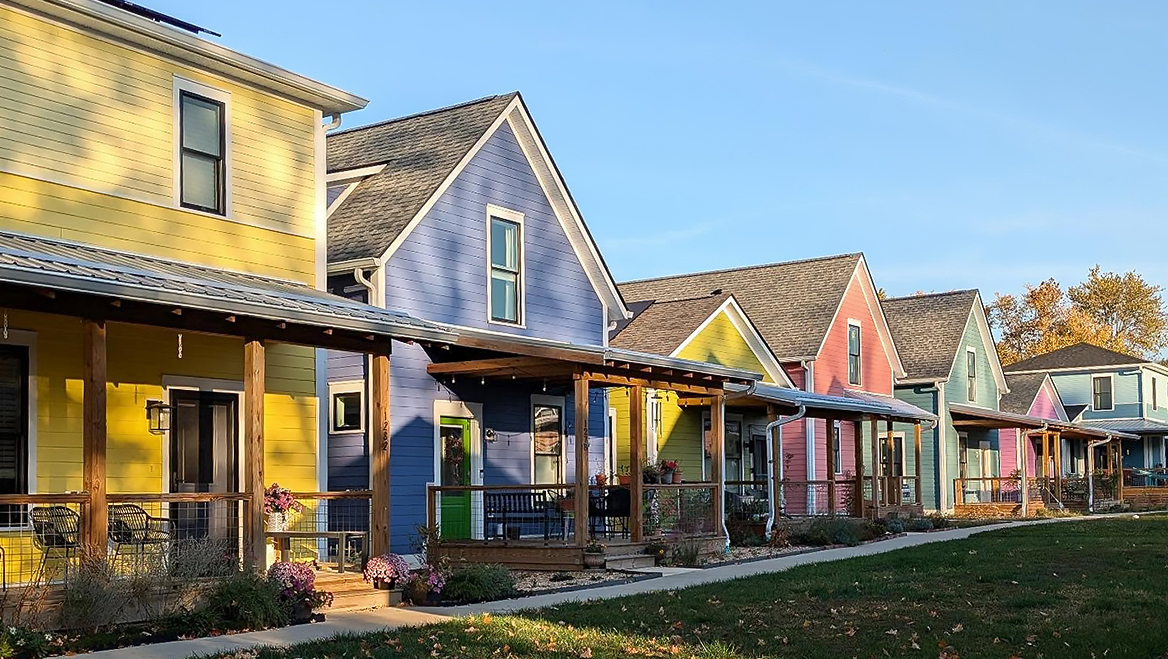
Bloomington Cohousing, a neighborhood on the southwest side of Bloomington, Indiana, has 26 cottage-style homes with community common spaces throughout. Photo courtesy of Bloomington Cohousing /Facebook.
2. Diversify the housing stock
To thrive, a town needs more than large-lot, single-family homes. Reintroducing missing middle housing — duplexes, cottage courts, accessory units, boarding houses, and apartments above shops — creates attainable options for teachers, tradespeople, entrepreneurs, and retirees. Bloomington, Indiana, a university town with a population of around 85,000, has amended local codes to permit cottage housing and other forms of missing middle housing, which increases housing choice and affordability outside of large metropolitan cores.
Housing diversity also broadens the tax base, supports local employers, and allows residents to remain in the community through different stages of life. Claremore, Oklahoma, home to about 19,500 people, implemented a pilot program using pre-approved building plans that helped streamline permitting and contributed to increased applications, approvals, and new construction activity. By lowering regulatory friction and applying strategies outlined in the Housing Supply Accelerator Playbook, small cities and towns can make incremental missing middle housing.
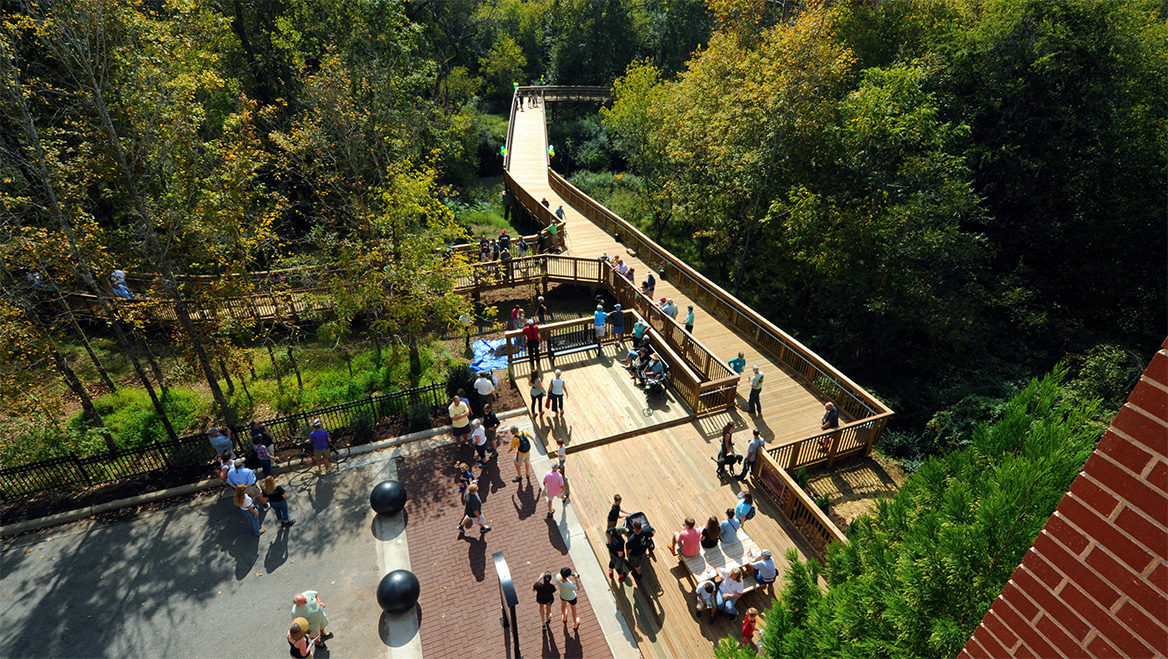
In Hillsborough, North Carolina, the three-mile-long riverwalk is an accessible, urban greenway that connects directly to downtown. Photo courtesy of Chapel Hill/Orange County Visitors Bureau.
3. Prioritize sustainable stewardship
Small towns can lead in practical sustainability by using rain gardens and bioswales to manage stormwater while reducing strain on aging infrastructure. Shade trees lower cooling costs. Visible solar and water-harvesting projects demonstrate fiscal and environmental responsibility. Low-impact development practices and preservation of creeks and vegetation features allow a blend of nature and community.
Hillsborough, North Carolina, with around 10,000 residents, has adopted a comprehensive sustainability strategy focused on clean energy, resilience, and environmental stewardship. With a commitment to transitioning municipal operations to 100 percent clean and renewable energy by 2050, they are integrating smart land use, conservation, and community engagement into its planning. The initiatives focus on environmental and economic resilience, including maintaining greenways and parks, promoting energy efficiency, and supporting habitat restoration.
Preserving and restoring existing buildings protects the energy already invested in materials and construction, reduces demolition waste, and reinforces the historic fabric that gives small towns their distinct identity. In tiny Spring City, Utah (pop. 1,000), the restoration of historic limestone homes and buildings has helped establish the town as a National Historic District and a destination for visitors, supporting a small but meaningful tourism and arts-based economy.
Green infrastructure is not simply aesthetic, however. By integrating natural features into transportation, a community can enhance mobility while conserving landscape assets. Early planning efforts in Pflugerville, Texas, in the 1980s focused on preserving tree corridors, agricultural fencerows, and creek corridors with their associated floodplain areas. As the population expanded to more than 65,000, this system is now a 50-plus-mile hike-and-bike trail system linking neighborhoods, schools, employment, and shopping.
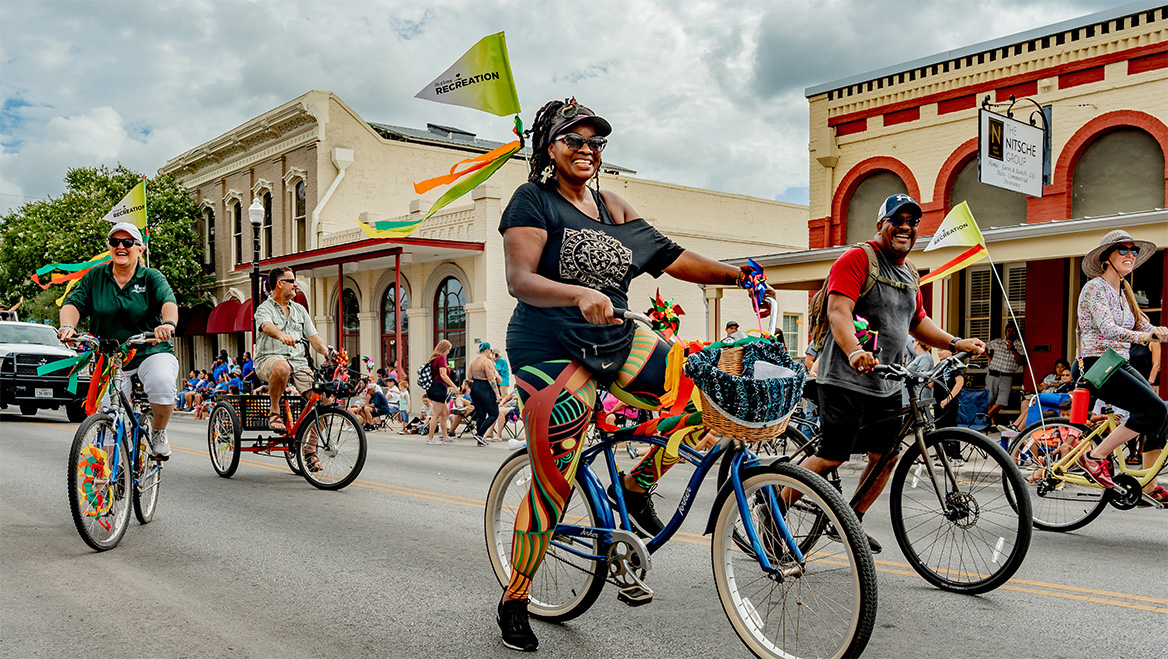
Building on the city's grid improvements, Bastrop, Texas, used its nationally accredited Main Street Program to revitalize its downtown through commitments to economic vitality and community events such as the Bastrop Homecoming Parade. Photo by CCR Studios.
4. Reclaim the walkable grid
Most historic towns were built at a human scale in a traditional grid pattern — and for people, not cars. Revitalization can begin by narrowing wide streets, repairing sidewalks, and planting street trees that provide shade and comfort. Walkability supports local commerce, improves public health, strengthens social connections, and increases safety and independence for residents of any age.
In Bastrop, Texas (pop. 14,800), downtown street improvements have emphasized traffic calming rather than expansion. Lane widths were narrowed; pedestrian crossings were strengthened; and subdivision standards reinforced connected, grid-style street patterns. By prioritizing connectivity and right-sized streets, the city increased transportation options while reducing long-term infrastructure redundancy and the extent of pavement and utilities requiring ongoing maintenance.
Sandpoint, Idaho (pop. 8,692), adopted parking reforms, including reducing or eliminating minimum parking requirements in parts of the city, which has helped to remove barriers to infill and mixed-use development, as well as increase development activity.
Self-determination, even when growing
When a small town is in commuting distance of a growing city, it may experience a surge in population that feels like renewal. Families priced out of the urban housing market move progressively outward until affordability aligns.
Without intentional planning, though, development patterns often mirror metropolitan edges: disconnected subdivisions, widened arterials, and highway-oriented retail. In this scenario, Main Street struggles to compete with regional access, and residents commute elsewhere for work, healthcare, and major shopping. As infrastructure expands outward, initial tax gains may be offset over time by the cost of maintaining low-density growth.
In this pattern, a town becomes primarily a bedroom community, dependent on regional forces beyond its control and burdened with a fiscally unsustainable infrastructure.
However, decline is not inevitable, and a small town can grow while preserving its distinct character. These places can prioritize existing infrastructure over outward expansion and ensure that growth is a source of fiscal strength. Such towns were built for thousands of people and can support vitality again — not by recreating the past, but by shaping a future rooted in resilience, human connection, and strategic growth.
RECOMMENDED ARTICLES