
May 5, 2026
As hazard mitigation responsibilities shift away from the federal government, and the role of the Federal Emergency Management Agency (FEMA) itself seems to be in doubt, planners are navigating ways to respond and adapt. But the future isn't all doom and gloom, says Chrissy Caggiano, AICP, chair of the American Planning Association's (APA) Hazard Mitigation and Disaster Recovery Division. Caggiano, technical manager for planning at Michael Baker International, shares how states and cities can prepare, why some efforts to reform FEMA hold promise — and why there's still room for optimism.
Caggiano joined me for a conversation featured in the 2026 Trend Report for Planners. You can also hear the full conversation on the APA Podcast series, Trend Talk. This interview has been edited for clarity and length.
JOSEPH DEANGELIS: What is a planner's role in hazard mitigation today?
CHRISSY CAGGIANO: Early in my career, mitigation planning was dominated by emergency managers. Over my 15 years of writing and reviewing mitigation plans nationwide, one of the trends that we've seen is that the plans are stronger, more comprehensive, and more actionable when you've got a planner in the driver's seat or navigating the process.
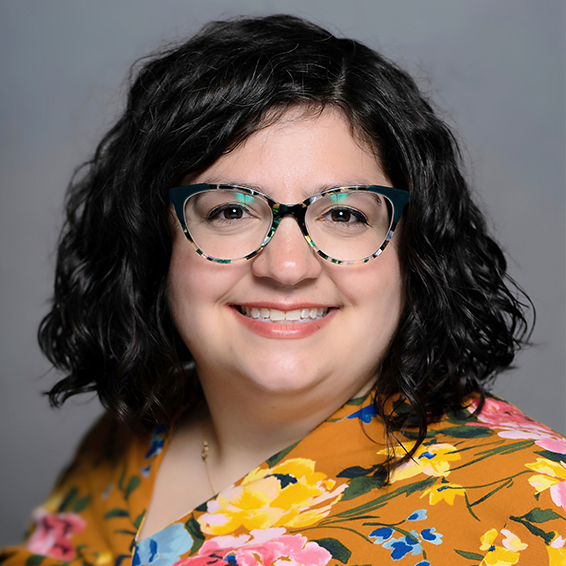
Chrissy Caggiano, AICP, is technical manager for planning at Michael Baker International, where she has been involved in hazard mitigation planning efforts at all levels of government. Photo courtesy of Chrissy Caggiano.
Sustained risk reduction, in a long-term sense, often comes down to where and how we build. Those are central tenets and values of planners. Beyond that, the role of the planner is often tied to building buy-in, partnerships, and championing risk reduction. Community engagement and community-oriented solutioning are central to the planner's wheelhouse.
DEANGELIS: What are some strategies to transition mitigation responsibilities from federal to local and state officials?
CAGGIANO: In a behavioral model, we typically talk about three interim steps. One is the belief that my risk is real. Two is that mitigation is worth the investment. And three is that I have the ability and the capability to get it done.
If you're going to have that thoughtful shift, you need to have the upfront investment in the capability and capacity of state, local, tribal, and territorial governments. My analogy is that if we are asking the states to cater dinner for us, we can't expect them to do it without either paying for it or dropping off the ingredients in the recipe.
DEANGELIS: What does that look like for planners engaged in this work?
CAGGIANO: I would love to see the trend go in the direction of fewer mitigation plans and more mitigation planning, more of that consistent act towards planning for a resilient and climate-adaptable future and less meeting a set of requirements. And that is going to mean more of that consensus building, really understanding what are my community's values? What is our capacity? And when will we need help?
DEANGELIS: How can states take ownership of hazard mitigation?
CAGGIANO: There are states that have really been excelling in this space for decades. Yes, it is California, but it's also Iowa, Florida, and Massachusetts. At the other end, you've got states that are really just getting their sea legs.
Frankly, what it comes down to is government efficiency. Even now, we see how much state turnover impacts mitigation projects. Mitigation projects take a lot of political will. But there are avenues, even now, for states to take more ownership. The big one FEMA offers is called Program Administration by States, where you can be PAS in two areas. One is around the delegation of plan approval, and the second is around the delegation of grants management. If you start in a small way now in a program that already exists, that continues to position you for the future.
"Mitigation projects take a lot of political will. But there are avenues, even now, for states to take more ownership."
DEANGELIS: How are planners coping with this environment of uncertainty?
CAGGIANO: I was walking around Philadelphia, and a vendor had a shirt that said, "It is what it is, and it ain't great." I think that is where a lot of us are right now, because the change has been so rapid. We haven't had the time to take the step back and recalibrate what this means.
The central question we often get is: Where's the money going to come from? When you have competing priorities and the sky is blue, mitigation tends to fall lower on that list of priorities, which is why the Hazard Mitigation Grant Program (HMGP) was so important for so many years. There hasn't been any HMGP authorized, I believe, since February — that's a pretty big change.
I think we're moving from the shocked period to "we still know this is important. This is key to who we are." Now it's moving into a phase with a bit of hope, of "Alright, we've got this. How can we do it again in the future?"
DEANGELIS: Looking into the near future, what are some potentially optimistic trends?
CAGGIANO: My dream scenario is that we aren't talking about hazard mitigation planning; we're just talking about how we have safe and sustainable communities.
I am optimistic about more community-oriented and micro-level planning that's aligned to a specific problem or pain point. We're probably not going to fix everything at the same time, but how can we chunk the mitigation or resilience puzzle?
There are also some interesting reform bills on the table that could harness what planners' role looks like. The big one is the FEMA Act of 2025, which looks at how we can stack federal resources to more efficiently deliver. Then, the inherent nature of planners is that we want to help. As an industry, we're sitting here saying, "Put us in, coach."
This interview is a part of the APA Podcast Trend Talk series, created for the 2026 Trend Report for Planners.
RECOMMENDED ARTICLES