
Nov. 24, 2026
The days are shorter and colder, so there’s no better time of year to curl up on the couch with a good book. Grab a cozy blanket and a warm beverage and deepen your expertise with one of the books featured in the Journal of the American Planning Association (JAPA).
Stay in the know
These thought-provoking texts touch on some of the most important topics in planning today, including placemaking for well-being, equitable cities, emergency management, and disaster preparedness. After reading each brief synopsis below, click through to read the full JAPA review. A special thanks to our JAPA reviewers: Timothy Beatley, Jeffrey S. Lowe, Kiyomi Kawamoto, Lina Moe, Stephanie Rouse, AICP, and Jennifer Hiatt.
OUR RECOMMENDED BOOKS ARE:
Life in Three Dimensions: How Curiosity, Exploration, and Experience Make a Fuller, Better Life
Shigehiro Oishi, 2025, Doubleday, 256 pp, $18
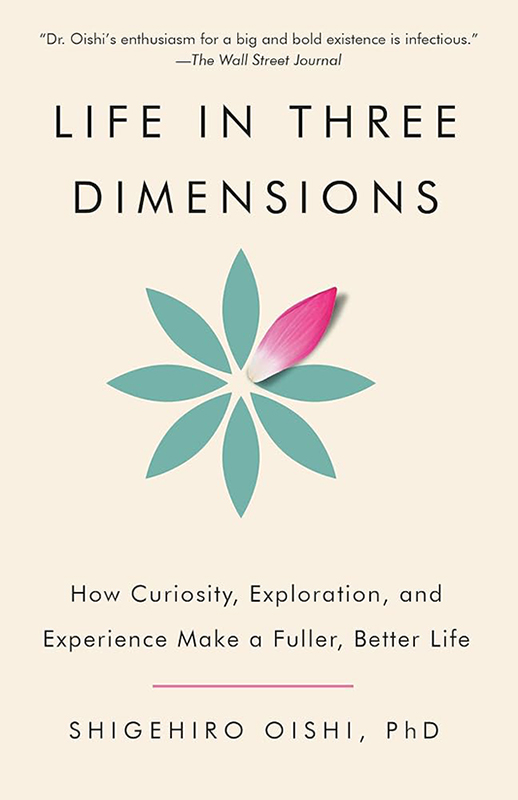
This inspiring book provides an alternative answer to the question, “What is a good life?” University of Chicago professor Shigehiro Oishi argues, in 14 highly readable chapters, that the two dimensions of life that are typically emphasized in psychology and beyond — the life of happiness, and a life of meaning or purpose — are simply inadequate. He proposes a third vision of and path to a good life that he calls a psychologically rich life.
A challenge for cities is to balance opportunities for their citizens to take chances and do things that might involve some level of danger on the way to more psychologically rich lives, with our usual goals of protecting health and safety.
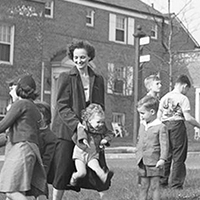
Planners should be interested in this book because the history of garden apartments highlights three dilemmas slowing the expansion of multifamily housing today: how government can stimulate private financing of apartments without the fraud and corruption of the Section 608 program, how to foster housing quality while minimizing cost, and how to nurture socially vibrant communities that are also socioeconomically diverse.
Read the full JAPA review by Timothy Beatley, University of Virginia.
Co-Cities: Innovative Transitions Toward Just and Self-Sustaining Communities
Sheila R. Foster and Christian Iaione, 2022, The MIT Press, 336 pp, $40
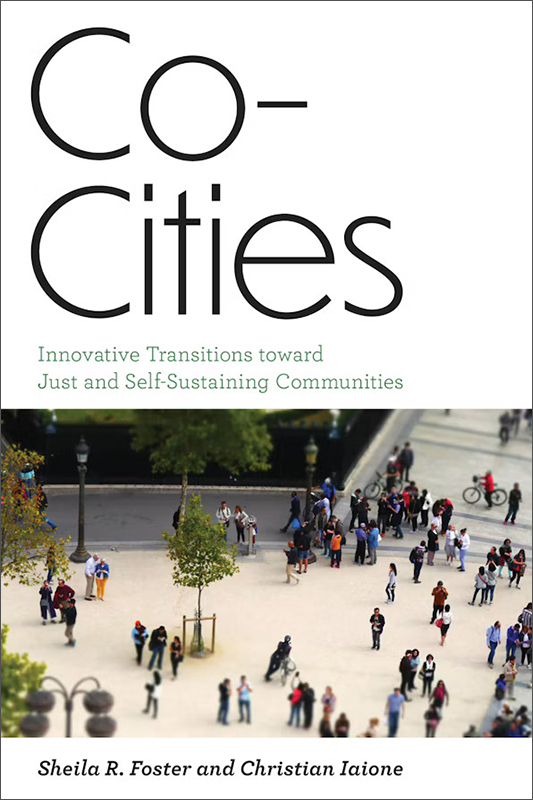
As cities and regions become more populous, an increasing majority of the world’s humanity, wealth, and resource disparities continue to grow between neighborhoods in the same city, as well as places in the same region. Urban scholars do not view this gap as a new problem, and the literature abounds with different approaches to creating a more just and smarter metropolis amid urban growth.
The authors provide another approach grounded in participant observation and analysis of more than 500 projects, from community gardens and community land trusts implemented at narrower scales to collaboration pacts and civic use regulations enacted citywide, taking place in more than 200 municipalities from across the globe.
The authors offer policies and practices that advance the normative goals of the right to the city — democratization inclusive of the disenfranchised, justice, and sustainability — through technologies or social innovations in the provision of urban services that define smart cities.
Read the full JAPA review by Jeffrey S. Lowe, Texas Southern University.
Design Before Disaster: Japan’s Culture of Preparedness
Miho Mazereeuw, 2025, University of Virginia Press, 456 pp, $39.50
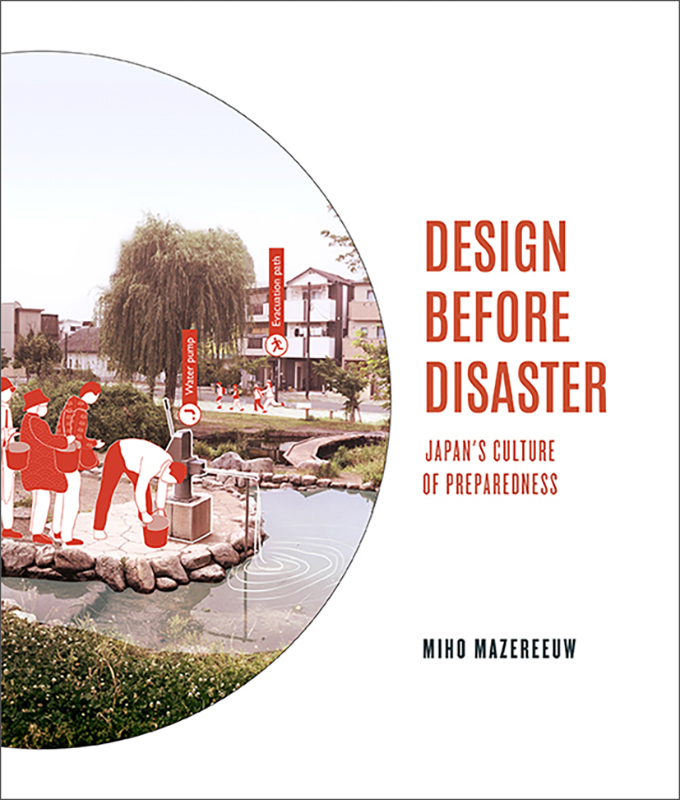
This book provides insights about how to prepare a resilient society against natural disasters for all students, researchers, planners, and architects from the perspectives of spatial, policy, and collaborative design.
Mazereeuw states that Japan’s central idea in disaster management is preparedness, which involves designing a recovery process before the event occurs. It differs from the U.S. approach to disaster management, which focuses on emergency management after a disaster happens. Based on the preparedness concept, Japan has enacted disaster mitigation policies and prepared community organizations to respond to disasters.
One of the most enlightening perspectives in the book is the dual-use design of infrastructure in Japanese public space: one for daily use and another for disaster use.
Read the full JAPA review by Kiyomi Kawamoto, University of Hawaii at Manoa.
The New American Small Town: Lessons for Sustainable Urban Futures
Jennifer Mapes, 2025, West Virginia University Press, 178 pp. $26.99
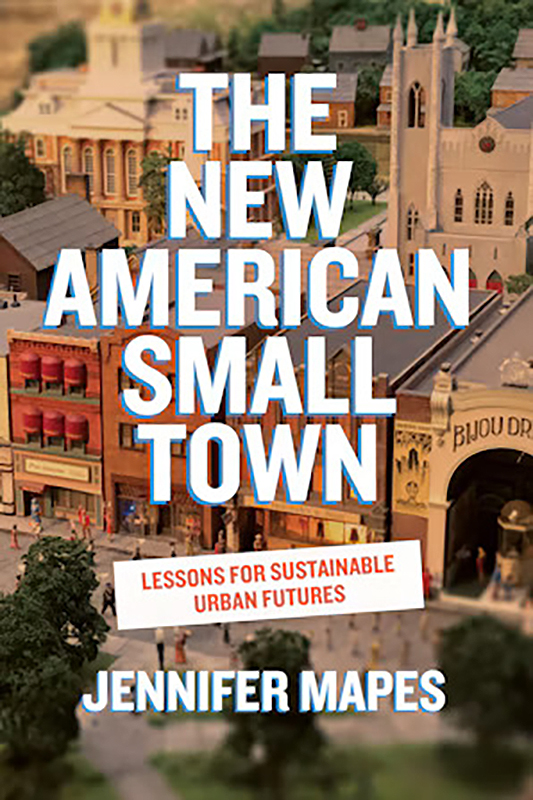
Imagine you’re reading James Howard Kunstler’s grim portrait of declining small-town America, only to discover your hometown is his prime example. This was geographer Jennifer Mapes’s experience on finding Schuylerville, New York, spotlighted in Kunstler’s The Geography of Nowhere (1993). Her reaction — part inspiration, part frustration — sets the tone for The New American Small Town, her insightful exploration of small towns as real places and fraught sites of American cultural myths.
Mapes does not prescribe specific policies, but her book will appeal to planners and policymakers interested in how context-sensitive development can be applied to small towns’ diverse trajectories. In the end, Mapes leaves readers cautiously optimistic, saying that small towns remain appealing places to live, with urban-like amenities, local character, and dense, often walkable spaces.
Read the full JAPA review by Lina Moe, Rutgers University.
If You Want to Win, You’ve Got to Fight: A Guide to Effective Transportation Advocacy
Carter Lavin, 2025, Island Press, 216 pp, $32
Most change doesn’t happen without targeted advocacy efforts — a statement especially true in the world of transportation advocacy. Cars have dominated the way we travel in the U.S. for decades, erasing a somewhat recent past where we traveled on foot and by trolley, bus, or bike. To remind communities that life beyond just cars is not only an option but a necessity, well-thought-out campaigns for change are needed, a path that author Carter Lavin lays out for readers in his book.
Although it is a road map for transportation advocacy, with processes and agencies specific to the transportation world, the concepts transfer to any planning-related field, such as housing or historic preservation. Lavin’s book is filled with examples of small and large advocacy work that brought about real change in communities.
Read the full JAPA review by Stephanie Rouse, AICP, and Jennifer Hiatt, Booked on Planning.
RECOMMENDED ARTICLES