

Check Out Our Passport Courses
Passport is your ticket to the training, experiences, and connections that will take you where you want to go in your planning career. Subscribe for unlimited access for one year to APA's extensive learning library of solution-oriented content facilitated by planners, for planners.
-
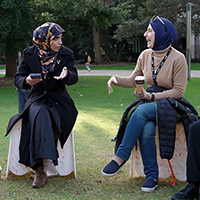
What Happens When Women Design for Women? Researchers Found Out.
A team in Sydney, Australia, turned a once‑ignored green space into a data‑backed case study of how inclusive design reshapes public spaces.by: Natalie Missakian February 12, 2026A team in Sydney, Australia, turned a once‑ignored green space into a data‑backed case study of how inclusive design reshapes public spaces. -
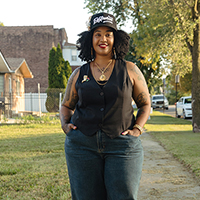
Challenging Perceptions of ‘Don’t Go’ Neighborhoods Can Create Opportunities
By pushing back, planners may boost housing supply and economic development in Chicago and other historically segregated cities.by: Pete Saunders, AICP October 28, 2025By pushing back, planners may boost housing supply and economic development in Chicago and other historically segregated cities. -

Inside the Urban Institute’s New Tool for Building Equity
With point-based data, cities are creating maps of how well services match their community’s needs, block by block.by: Elissa Chudwin July 24, 2025With point-based data, cities are creating maps of how well services match their community’s needs, block by block. -

How Word Choice Builds More Inclusive Communities
Rethinking the language we use can foster trust and make people feel welcome.by: Jon DePaolis February 10, 2025Rethinking the language we use can foster trust and make people feel welcome. -
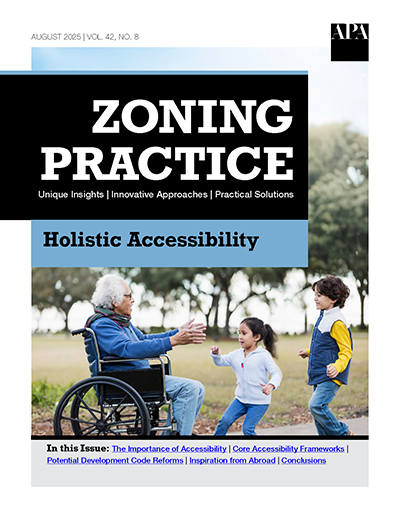
Holistic Accessibility
Zoning Practice — August 2025by: Jill Bahm, AICP, Rose Kim August 01, 2025This issue of Zoning Practice explores how zoning and other local development regulations can promote accessible places, spaces, and homes. It begins with an explanation of the importance of accessibility for all communities and a brief overview of common accessibility frameworks before highlighting specific regulatory strategies and inspirational international efforts.List Price$10.00ZP Subscriber$0.00 -

When Driving is Not an Option
It’s time to recognize and listen to the 25 percent of the U.S. population that doesn’t drive, says author Anna Letitia Zivarts.by: Steve Wright September 05, 2024It’s time to recognize and listen to the 25 percent of the U.S. population that doesn’t drive, says author Anna Letitia Zivarts. -

What Now for Communities and the Unhoused?
Planners find solutions even before the recent Grants Pass Supreme Court decision.by: Daniel Vock July 02, 2024Planners find solutions even before the recent Grants Pass Supreme Court decision. -

As Gayborhoods Shrink, Pop-Up LGBTQ+ Spaces Can Build Inclusive Communities
Events are meeting queer people where they are. Here’s how planners can open doors to more.by: Aaron Greiner May 30, 2024Events are meeting queer people where they are. Here’s how planners can open doors to more. -

The New Math of Climate Resilience
A groundbreaking project in Norfolk, Virginia, multiplies the impact of a $112 million federal grant by making social vulnerability and environmental justice, not just property values, major factors in its calculations.by: Jim Morrison April 18, 2024A groundbreaking project in Norfolk, Virginia, multiplies the impact of a $112 million federal grant by making social vulnerability and environmental justice, not just property values, major factors in its calculations. -

4 Tools to Empower Data-driven Planning for Climate and Transportation Equity
Planners can take advantage of the national focus on infrastructure investments to enhance mobility and climate resilience for underserved communities.by: Kelly Dunn, David Wasserman, AICP July 27, 2023Planners can take advantage of the national focus on infrastructure investments to enhance mobility and climate resilience for underserved communities. -

How Cellphone and Fitness App Data is Helping Create Equity in Public Parks
Park planners harness novel data sources and tools to direct equitable conservation, amenities, and access.by: Clement Lau, FAICP July 20, 2023Park planners harness novel data sources and tools to direct equitable conservation, amenities, and access. -

Equitable Zoning for Manufactured Housing
Zoning Practice — April 2024by: George Frantz April 01, 2024This issue of Zoning Practice examines the persistent inequitable treatment of manufactured housing in many local zoning codes and offers considerations for code updates. It begins with brief summaries of the important role manufactured housing plays in supporting housing choice and affordability and includes findings from a five-state analysis of zoning regulations for manufactured housing.List Price$10.00ZP Subscriber$0.00 -

3 Essential Tips for Planning with Multilingual Communities
Community engagement experts offer tested approaches that prevent tokenism, create trust, and foster a sense of belonging.by: Rebecca Greenwald June 09, 2023Community engagement experts offer tested approaches that prevent tokenism, create trust, and foster a sense of belonging. -

Why We Need Queer Urbanism
Heteronormative planning structures exclude and can even endanger queer people, especially those who are trans and BIPOC.by: Aaron Greiner May 19, 2023Heteronormative planning structures exclude and can even endanger queer people, especially those who are trans and BIPOC. -

Equitable Community Engagement Requires Learning, Self-Reflection, and Transparency
Five ways planners, engineers, and other allied professionals can establish a long-term, measurable approach to equitable planning.by: Jennifer Fierman, AICP, Kristof Devastey, PE, PTOE, PTP, Lindsay Welsch Sveen, PhD March 23, 2023Five ways planners, engineers, and other allied professionals can establish a long-term, measurable approach to equitable planning. -

Advancing Equity, Diversity, and Inclusion in the Planning Profession Is an Evolving Journey
The Equity in Zoning Policy Guide and Equity in Practice case studies from the American Planning Association help planners move forward on EDI.by: Roberta Rewers February 23, 2023The Equity in Zoning Policy Guide and Equity in Practice case studies from the American Planning Association help planners move forward on EDI. -

Hurricane Recovery Fails the Financially Vulnerable
Based on a decade of data from Hurricane Sandy, two New York City planners explore the inequities of disaster mitigation and recovery — and what needs to change to prevent climate gentrification.by: Donovan Finn, PhD, Thaddeus Pawlowski September 30, 2022Based on a decade of data from Hurricane Sandy, two New York City planners explore the inequities of disaster mitigation and recovery — and what needs to change to prevent climate gentrification. -

Transportation Strategist Naomi Doerner Navigates Mobility Justice
How the country's first transportation equity manager is building a framework to protect the fair and safe movement of people of color.by: Sophia Burns August 31, 2022How the country's first transportation equity manager is building a framework to protect the fair and safe movement of people of color. -

Planning Accessible Communities
PAS Memo 117by: Jeannine Godwin, AICP July 01, 2023This PAS Memo explains the importance of planning and designing truly inclusive communities that engage people with disabilities and meet their accessibility and mobility needs.List Price$10.00Member$0.00 -

How to Uncover and Honor LGBTQ+ History in the Built Environment
Kentucky and Maryland are the first states to use historical context studies to highlight places influential to the LGBTQ+ community — and drive planning efforts.by: Tatiana Walk-Morris May 20, 2022Kentucky and Maryland are the first states to use historical context studies to highlight places influential to the LGBTQ+ community — and drive planning efforts. -

A Passion for Planning and Social Justice
AAPI planner Chancee Martorell talks about raising the visibility of Thai and other immigrant communities, the three Ps of affordable housing, and dedication to “unwavering principle over political expediency.”by: Tippe Morlan, AICP April 28, 2022AAPI planner Chancee Martorell talks about raising the visibility of Thai and other immigrant communities, the three Ps of affordable housing, and dedication to “unwavering principle over political expediency.” -

What Planners Need to Know about Big Data
Five applications and considerations to help you get started — and prioritize equity and privacy.by: Alexsandra Gomez April 18, 2022Five applications and considerations to help you get started — and prioritize equity and privacy. -

A Community-Powered Plan for Cultural Preservation
From land to language, how Hilton Head Island's Gullah Geechee residents are working with planners to save their culture after generations of displacement.by: Philip Walker, FAICP October 14, 2021From land to language, how Hilton Head Island's Gullah Geechee residents are working with planners to save their culture after generations of displacement. -

7 Trends Knocking at the Planning Office Door
In today’s complex world, balancing everyday activities, near-term plans, and visioning for the future is more challenging than ever. APA Foresight has got you covered.by: Petra Hurtado, PhD, Alexsandra Gomez July 08, 2021In today's rapidly changing world, it can be tough to stay abreast of all the challenges facing planners. This article explores seven of the most pressing trends for the profession and what they could mean for your community. -

Dementia-Friendly Public Participation
Accessible public engagement tools are key to ensuring the built environment meets the needs of community members with dementia and other disabilities.by: Samantha Biglieri, PhD, M.Pl. June 17, 2021People living with dementia have the right to be included in the communities in which they live. Fortunately, there are several easy, low-cost accommodations practicing planners can make to better engage them in the planning process. -
Urban Green Space, Public Health, and Environmental Justice: The Challenge of Making Cities ‘Just Green Enough’
Landscape and Urban Planning, 125: 234-244, 2014by: Jennifer Wolch, Jason Byrne, Joshua NewellThis article belongs to the Biophilic Planning, Built Environment, and Health and Social Equity collections. -
Active Living and Social Justice: Planning for Physical Activity in Low-income, Black, and Latino Communities
Journal of the American Planning Association, 72(1): 88-99, 2006by: Kristen DayThis article belongs to the Built Environment and Health and Social Equity collections. -
A Call to Courage: An Open Letter to Canadian Urbanists
June 2020by: Jay PitterThis article and online training encourages urbanists working in the Canadian context to respond to discussions of systemic oppression and anti-Black racism occurring across North America. -
Rethinking Environmental Racism: White Privilege and Urban Development in Southern California
Annals of the American Association of Geographers, 90(1): 12-40, 2000by: Laura PulidoThis article challenges the environmental racism literature for its lack of engagement with the concept of racism. -
The Ghetto as a Resource for Black America
Journal of the American Institute of Planners, 40(1): 17-30, 1974by: William GoldsmithThis article exposes that current approaches to revitalization do not deal with the issue of power and proposes a new approach that focuses on solutions and community, dealing directly with power and control. -
“Race" and Sexuality: Challenging the Patriarchal Structuring of Urban Social Space
Environment and Planning D: Society and Space, 11: 415-432, 1993by: Linda PeakeThis article presents a framework for understanding patriarchy and applies it to analyze living arrangements among low-income women and the creation of a lesbian residential area in Grand Rapids, Michigan. -
A Retrospective View of Equity Planning Cleveland 1969–1979
Journal of the American Planning Association, 48(2): 163-174, 1982by: Norman Krumholz, FAICPThis article features Norman Krumholz speaking on his experience with equity planning in Cleveland in the 1970s. -
Some Observations on Race in Planning
Journal of the American Planning Association, 60(2): 235-240, 1994by: Robert MierThis article includes anecdotes about working with Mayor Harold Washington of Chicago, demonstrating the importance of equity as a clearly stated political priority. -
Refusing to Appropriate: The Emerging Discourse on Planning and Race
Journal of the American Planning Association, 60(2): 242-243, 1994by: Teresa CordovaThis article unapologetically claims that race cannot continue to be a taboo subject in planning and urges planners to create a more equitable planning process. -
Planning in the Face of Power
Journal of the American Planning Association, 48(1): 67-80, 1982by: John ForesterThis article explores how information and misinformation are used to influence the planning process and proposes a new form of “progressive” planning practice. -
Paul Davidoff and Advocacy Planning in Retrospect
Journal of the American Planning Association, 60(2): 139-143, 1994by: Barry CheckowayThis article shares how Paul Davidoff attempted to translate APA's ethical mandate into institutional and individual accountability. -
Promoting Equitable Development
Indiana Law Review, 34: 1273-1290, 2001by: Angela Glover BlackwellThis article tracks how social and economic changes have created new challenges and opportunities for addressing inequity. -
Equitable Development: Untangling the Web of Urban Development Through Collaborative Problem Solving
Sustain, 21: 3-12, 2010by: Carlton EleyThis article offers perspectives on smart growth and equitable development, opening a discussion on how to use these practices to improve conditions for all Americans. -
The Minority-Race Planner in the Quest for a Just City
Planning Theory, 7(3): 227-247, 2008by: June Manning ThomasThis article discusses the role of the planner in working towards a just city and points out the unique role of the minority-race planner. -
Income Inequality and Social Disfunction
Annual Review of Sociology, 35: 493-511, 2009by: Richard Wilkinson, Kate PickettThis article reviews literature on health outcomes from societies with large and small measures of income inequality and finds that places with greater inequality also have poorer health and more social problems. -
Beyond Food Deserts: Measuring and Mapping Racial Disparities in Neighborhood Food Environments
Journal of Planning Education and Research, 27: 469-482, 2008by: Samina Raja, Changxing Ma, Pavan YadavThis article investigates the food environment in Erie County, New York, finding that while there are no food deserts, different racial groups have access to different food destinations. -
Deliberating Across Differences: Planning Futures in Cross-Cultural Spaces
Policy and Society, 28(3): 197-209, 2009by: Marisa ZapataThis article uses a case study from Modesto, California to describe how planning processes can account for power and cultural difference. -
Cities and Diversity: Should We Want It? Can We Plan For It?
Urban Affairs Review, 41(1): 3-19, 2005by: Susan FainsteinThis article critiques planning’s focus on diversity and advocates instead for the model of the just city. -
The Geography of Despair: Environmental Racism and the Making of South Phoenix, Arizona, USA
Human Ecology Review, 12(2): 156-168, 2005by: Bob Bolin, Sara Grineski, Timothy CollinsThis article shares the story of residential and economic segregation by race and class in the development of the city of Phoenix, and its legacy of environmental injustice. -
Restoring Mill Creek: Landscape Literacy, Environmental Justice and City Planning and Design
Landscape Research, 30(3): 395-413, 2005by: Anne Whiston SpirnThis article looks at the Mill Creek neighborhood in Philadelphia to examine the racial history of disinvestment and neglect and current efforts to address these injustices through planning and design. -
Breaking Through to Regional Equity
Race, Poverty & the Environment, Fall 2008by: M. Paloma PavelThis article urges planners to take a regional approach to equity planning, given that spatial racism is most visible at this scale. -
America's Tomorrow: Race, Place, and the Equity Agenda
Open Forum: Voice and Opinions from Leaders in Policy, the Field, and Academia, 2012by: Angela Glover BlackwellThis article details why equity is not just a moral issue, but an economic one, given demographic changes. -
Toward Indigenous Planning? First Nation Community Planning in Saskatchewan, Canada
Journal of Planning Education and Research 36(4): 1-11, 2015by: S. Yvonne Prusak, Ryan Walker, Robert InnesThis article studies community planning efforts in Canadian First Nation reserves to explore the ways indigenous planning principles interact with settler planning processes. -
Understanding the Disposition of Urban Planning Students Toward Social Justice and Equity Themes
SAGE Open: 1-15, July-September 2015by: Kirk HarrisThis article considers the attitudes of students towards social justice and equity and investigates how planning instruction may influence their understanding of these issues. -
Dietary Inequalities: What is the Evidence for the Effect of the Neighbourhood Food Environment?
Health Place, 27: 229-242, 2014by: Christina Black, Graham Moon, Janis BairdThis article outlines the state of research concerning food environments and dietary intake.
Showing 1 - 50
of 131
Next >